Tiny Trail Kids • November 25, 2026 • 13
How to Choose Preschool Science Fair and Space Week Costumes? STEM & Discovery Dress-Up Guide

Executive Summary: Every school year, October's World Space Week, spring STEM & Science Fairs, portable planetarium days, and nature discovery weeks give preschoolers and early elementary students an unforgettable stage to share how the world works. Choosing the right preschool science fair and Space Week costume means looking beyond quick hallway photos: children need breathable natural fabrics, secure wrist cuffs for hands-on table experiments, easy bathroom zippers, and comfortable chair-friendly silhouettes. From personalized astronaut jumpsuits and aviator flight suits to camouflage chameleons and eight-armed ocean octopuses, here is how to dress young scientists for confident discovery.
Why Embodied Dress-Up Supercharges Preschool STEM & Space Week Curiosity
Explaining abstract scientific ideas—orbital gravity, aerodynamic lift, marine ecosystems, or reptile camouflage—to a four- or five-year-old through flashcards alone rarely sticks for long. Yet the morning a child walks into their classroom zipped into a personalized astronaut suit or a spiral-tailed green chameleon jumpsuit, science stops being a worksheet topic and becomes an identity they proudly inhabit.
Early-childhood educators call this embodied learning: stepping into a role lowers presentation shyness and anchors new vocabulary to real physical memory. When a preschooler stands beside their painted solar system model wearing our personalized white astronaut space jumpsuit, they speak louder, point out Saturn's rings with genuine pride, and stay engaged in classroom discovery stations all morning.
Even better, school STEM weeks span far wider than outer space alone—welcoming aviation physics, ocean biology, and wildlife adaptation tables too. Every silhouette in our handmade children's costume collection is tailored from breathable cotton twill and cozy anti-pilling fleece so young presenters stay comfortable from morning circle time right through afternoon playground recess.
Four Science Fair & Space Week Themes Paired with Hands-On Kid Presentations
When a teacher's newsletter announces an upcoming Science & Discovery Day or Space Week parade, these four curriculum-aligned costume pairings give your child an instant, interactive project they can demonstrate themselves:
1. Planetary Astronomy & Lunar Exploration (Space Week Classic)
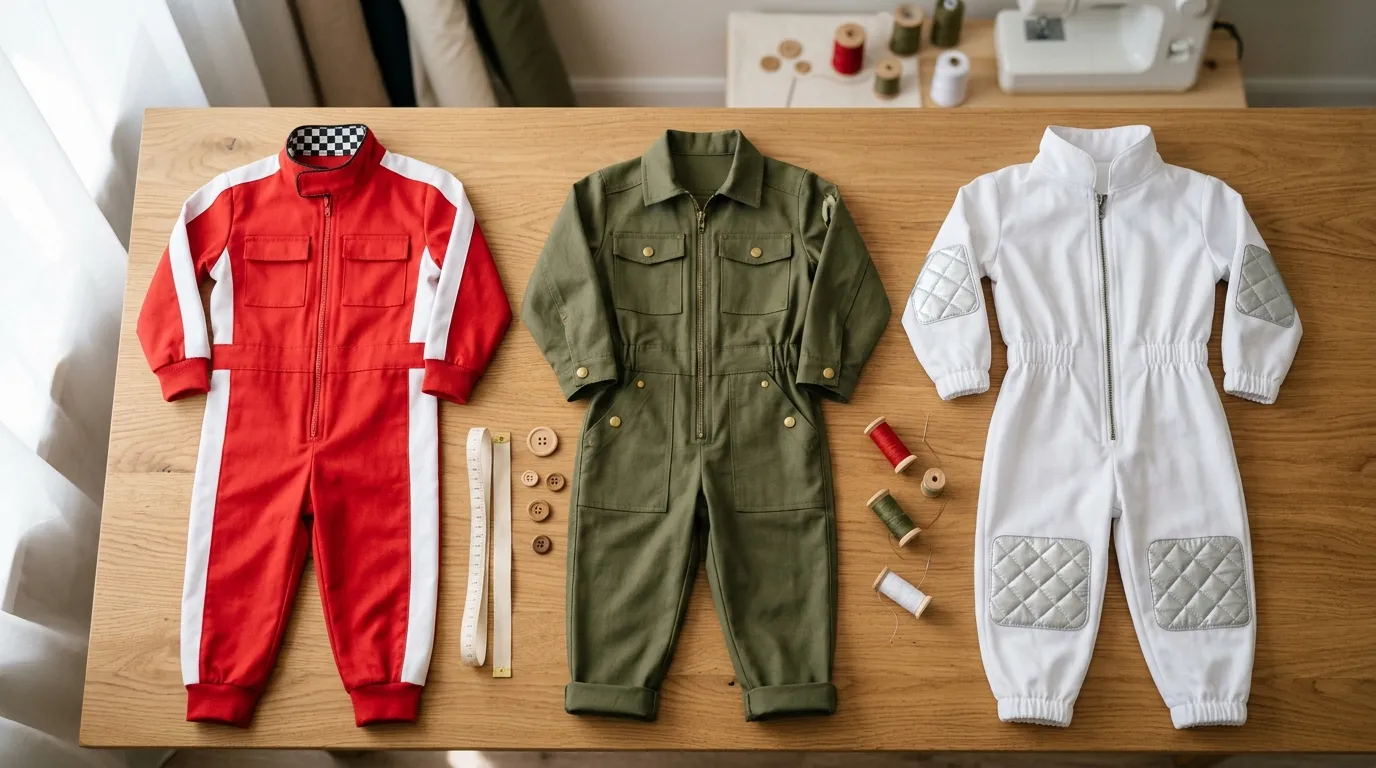
Celebrated globally every October during World Space Week—and throughout the year whenever mobile planetarium domes visit schools—astronaut themes shine brightest with crisp outfits from our space costumes collection. For cool autumn classrooms, our long-sleeve personalized white space jumpsuit offers authentic flight-crew styling; for warm spring auditoriums or heated classrooms, our white short-sleeve shorted astronaut space romper keeps active presenters breezy and cool.
Easy Kid-Led Demo: Arrange painted wooden or felt planets on a dark navy felt mat so your child can place Earth, ringed Saturn, and rusty-red Mars in order while explaining day and night with a small flashlight. Hosting a cosmic celebration afterward? Visit our kids' astronaut costume and space party guide.
2. Flight Physics, Wind & Weather Observation (Aviation STEM)
For children fascinated by airplanes, clouds, and wind direction, stepping up to the science table in our personalized green long-sleeve pilot flight suit from our aviator and career costume category commands instant excitement. With their own name stitched onto the chest like a test pilot, even quiet kids love launching simple aerodynamics demos.
Easy Kid-Led Demo: Fold three paper gliders with wide, medium, and narrow wingspans—or build a handheld paper pinwheel—so classmates can observe how moving air lifts wings and spins blades.
3. Biomimicry & Nature Camouflage: How Chameleons Blend In
In a auditorium filled with white lab coats, nothing captivates teachers and classmates faster than a living biology lesson on animal adaptation and camouflage! Two standout pieces in our handmade animal costume collection—our purple fleece flower chameleon jumpsuit and our handmade green chameleon lizard outfit—turn coiled tails, grasping toes, and color-blending habitats into a tangible story preschoolers immediately grasp.
Easy Kid-Led Demo: Cut a clear plastic sheet into a chameleon outline and slide it across green leaves, brown bark, and purple petals on a tray so friends can watch the transparent chameleon "change color" on every background!
4. Marine Biology & Cephalopod Intelligence: Eight Amazing Arms
Ocean ecosystems are a perennial preschool favorite, and our blue fleece kids' octopus hoodie is effortless to slip over everyday school clothes right before presentation hour. Kids love sharing fun facts—like how an octopus has three hearts and eight clever arms—while wiggling their own soft fleece tentacles! Planning a class trip to the science museum or aquarium next? Read our aquarium and museum field-trip costume guide.

Full-Day Classroom Readiness: Science Fair Costume Checklist Table
An outfit worn for six hours at preschool faces practical demands that a brief photo prop never encounters—from water-table experiments and art trays to independent restroom trips and circle-time chairs. Compare what works best in a real classroom:
| School-Day Activity | What Causes Classroom Hassles | Atelier-Engineered Solution |
|---|---|---|
| Hands-On Table Experiments | Floppy bell sleeves, bulky foam gloves, or dangling plastic tubes dipping into water trays | Soft rib-knit wrist cuffs that stay pushed up cleanly or short-sleeve romper cuts |
| Independent Restroom Breaks | Back-zip jumpsuits or tangled harness straps requiring teacher assistance | Easy front-zip jumpsuits and quick-pullover character hoodies |
| Sitting in Classroom Chairs | Rigid cardboard jetpacks or wire-frame shells that push kids forward off seats | Featherlight fiberfill-stuffed tails and flat back panels for comfortable sitting |
| Indoor Warmth & Presentation | Plastic bubble helmets that muffle speech and overheat within five minutes | Breathable cotton twill collars and open hoods that keep voices clear and audible |
Why Soft Textile Craftsmanship Beats Cardboard Props and Plastic Helmets
Parents often spend late nights taping foil onto cardboard boxes or buying rigid plastic astronaut helmets, only to watch their child set the heavy helmet aside two minutes into morning drop-off because teachers cannot hear them speak and classroom cubbies cannot fit bulky props.
At our Tiny Trail Kids Antalya workshop, we build every visual cue directly into soft, wearable tailoring—embroidered geometric patches, crisp aviation collars, plush dorsal crests, and lightweight tentacles—leaving your child's hands completely free to hold magnifying glasses, planet spheres, or seashells. Learn how we keep 3D tails and hoods balanced on classroom chairs in our polar fleece animal jumpsuits and hoodies guide, or explore cool STEM-ready looks for first graders in our guide to choosing kids' costumes for school plays and stage shows.

Keeping the Discovery Spark Alive at Home After Science Fair Day
Once school pickup arrives, your child's excitement from presenting to classmates makes the following weekend prime time to deepen curiosity through playful home extensions:
- Balcony Moon-Phase Journal: Zip back into the astronaut jumpsuit after dinner for ten minutes on the balcony or porch, sketching whether the Moon looks like a crescent banana or a bright full circle.
- Backyard Nature Clue Quest: Combine the green chameleon jumpsuit or olive flight suit with a weekend outdoor clue trail—see step-by-step setup ideas in our Montessori-friendly open-ended dress-up play guide.
- Confidence Through Name Personalization: Having your child's own name stitched across their flight or space suit turns every teacher greeting ("Great job, Astronaut Leo!" or "Tell us about your planets, Captain Maya!") into a lasting confidence boost.
Classroom Prep Tip: Layer a lightweight breathable cotton tee underneath front-zip flight or space jumpsuits so your child can adjust effortlessly between sunny playground breaks and warm indoor presentation rooms.
Need help choosing between short-sleeve and long-sleeve STEM suits or planning ahead for a class Space Week date? Visit our frequently asked questions page or reach out directly via our contact page.
Age-by-Age Science Fair Presentation Coaching: The "Show, Touch, Ask" Method
Once your child's costume and table model are ready, parents often wonder how to help a four-, five-, or six-year-old share their topic without memorizing stiff, stressful scripts. Early-childhood teachers swear by the simple three-step "Show, Touch, Ask" routine—letting the child's handmade costume carry half the story naturally:
1. Ages 3 – 4 (Preschool Beginners): One Joyful Sentence + Tactile Prop
For three- and four-year-olds, thirty seconds of genuine enthusiasm beats a rehearsed speech every single time. Zipped into a white astronaut jumpsuit and holding up a wooden ringed planet, simply announcing "I am an astronaut exploring Saturn, the planet with icy rings!" delights the entire circle. Likewise, a toddler in a green or purple fleece chameleon suit pointing to their curled spiral tail to show "Chameleons hold onto tree branches with their curly tails so they never fall!" turns zoological anatomy into instant play.
2. Age 5 (Pre-K Explorers): Live Cause-and-Effect Demonstrations
Five-year-olds love testing predictions in front of friends. Wearing a personalized green pilot flight suit, your child can hold up two paper gliders with different wing shapes and ask classmates, "Which airplane do you think will glide farther across the rug—wide wings or narrow wings? Let's test both!" Similarly, a preschooler in a blue fleece octopus hoodie can press a small toy suction cup against a smooth tray to show how real octopus arms grip slippery ocean rocks.
3. Ages 6 – 7 (First-Grade STEM Showcases): Three-Icon Discovery Boards
In first-grade science fairs, children love standing beside a tri-fold poster organized around three simple visual icons—Habitat/Location, How It Works, and One Surprising Fact—fielding questions from visiting parents and teachers with the proud poise of a named mission specialist.
Coordinating Multi-Child Classroom STEM Teams
Many preschool and elementary STEM days group three or four classmates around a shared discovery table. Combining complementary handmade costumes turns a group booth into a cohesive visual story:
- "From Earth's Sky to Deep Space" Team: Two classmates in olive-green aviator flight suits demonstrate wind, clouds, and airplane wings while two partners in crisp white astronaut jumpsuits guide visitors past the Moon and planets.
- "Rainforest Canopy to Ocean Reef" Biodiversity Table: Kids in green and purple flower chameleon jumpsuits introduce forest camouflage right alongside partners in blue shark and octopus fleece hoodies explaining marine life layers.
- Portfolio & Yearbook Keepsake Photos: Natural cotton and fleece textures photograph timelessly under bright classroom windows without harsh synthetic glare, creating proud school portfolio memories families treasure for years.
Frequently Asked Questions
When do preschools typically celebrate Space Week and Science Fairs?
World Space Week takes place annually from October 4 to October 10 across preschools and primary schools worldwide, while STEM Fairs, Science Weeks, and Nature Discovery Days are commonly scheduled in late autumn (November) and spring (March through May).
Are white cotton astronaut jumpsuits easy to wash after classroom science experiments?
Yes. Our breathable cotton twill space suits are durable and machine-washable—simply zip closed, turn inside out, and wash on a gentle cold cycle to keep the crisp white fabric looking fresh for future play.
Will long sleeves get in the way during water or sensory-tray demos?
Not at all. Elasticized soft rib-knit wrist cuffs keep sleeves securely above the hands and allow teachers or kids to push sleeves gently up toward the forearm whenever needed, and we also offer short-sleeve romper versions for warm rooms.
Can classmates or siblings order matching personalized astronaut or pilot suits?
Yes! Siblings and preschool science project partners frequently order coordinating flight or space jumpsuits customized with each child's individual name and size—just message us ahead of your school event date to coordinate timing.
What helps a shy preschooler feel calm during a Show-and-Tell science presentation?
Skipping masks and bulky headpieces in favor of an open-collar personalized jumpsuit or cozy pullover character hoodie keeps breathing relaxed and speech crystal clear, while seeing their own name stitched on the chest builds proud ownership.
What lightweight props pair best with STEM costumes without cluttering school backpacks?
Stick to soft, unbreakable discovery tools that slip easily into a preschool tote: a wooden-handled magnifying glass for reptile and ocean hoodies, three folded paper gliders for green aviator flight suits, or a small felt pouch of painted wooden planets for white astronaut jumpsuits.
Which Space Week outfit stays most comfortable inside portable inflatable planetarium domes?
Because inflatable classroom planetarium tents warm up quickly when twenty preschoolers sit together inside, breathable woven cotton astronaut suits—either our long-sleeve cotton jumpsuit layered over a light tee or our breezy short-sleeve space romper—keep young stargazers cool and focused throughout the show.