
Tiny Trail Kids • November 27, 2026 • 12
Why Do Hats, Caps, and Hoods Slip Off Children’s Costumes While Playing? Secrets to Securing Headwear Without Tightening and Ensuring Comfort

Without a doubt, the most completing part of the costume you carefully choose for your child's birthday party, school performance, or themed photo shoot is the headpiece. The iconic pilot cap or aviator hat with goggle details that transforms a pilot jumpsuit into a real aviator uniform, the checkered racing cap that takes the energy of a racer's jumpsuit to the next level, or the hoods with three-dimensional ears and eyes that give a rabbit, shark, or chameleon costume its fairytale character... However, many parents share the same disappointment on party day: "We put on the costume and the hat or hood, but as soon as the child ran two steps and bent down to chase the balloons, the hat slipped off their head, while the hood either fell backward or came forward and covered their eyes!"
It is impossible to expect a child of play age (between 1 and 7 years old) to keep their neck upright and still so that the hat on their head does not fall off. Children naturally jump, crouch down, quickly turn their heads from side to side, and get picked up. If a child's costume hat, cap, or hood is made merely as a smaller copy of adult hats (with a standard rigid shape or an unbalanced center of gravity), it is a miracle if that headpiece stays on the child's head for more than 30 seconds. Conversely, if a very tight and stiff elastic band is sewn onto the back to keep the hat from falling, it will cause redness and pressure on the child's forehead within 5 minutes, prompting the child to pull off and throw the hat away.
As the Tiny Trail Kids design studio, in this comprehensive pattern and comfort guide, we examine step by step why headpieces slip during play in models such as our Olive Green Pilot Flight Jumpsuit, Red-and-White Race Car Costume, Children's Police Uniform, White Fleece Bunny Jumpsuit, and Shark Hoodie Sweatshirt, the textile-engineering solutions that secure hats and hoods without constricting a child's head, and practical securing tips you can apply at home in seconds.
1. Why Do Hats, Caps, and Hoods Slip Off Children's Heads During Play? (4 Anatomical and Physical Reasons)
Four fundamental reasons at the intersection of child anatomy and fabric physics lie behind a child's hat or costume hood constantly slipping off their head:
- 1. The Silky, Slippery Texture of Babies' and Children's Hair: Especially between the ages of 1 and 4, children's hair strands are extremely fine, soft, and silky, with a low coefficient of friction. If shiny satin, slippery polyester, or stiff interfacing is used in the inner lining of the hat or hood, the fabric moves over the hair almost as if sliding on ice and falls off with the slightest head movement.
- 2. The "Occipital Protuberance" and Forehead Ratio in Children's Head Anatomy: Young children's head shape differs from that of adults; the forehead and crown are rounder, while the retaining hollow at the lower back of the head is still softer. Since a standard straight-cut hat does not wrap around this rounded anatomy, it slips upward and comes off.
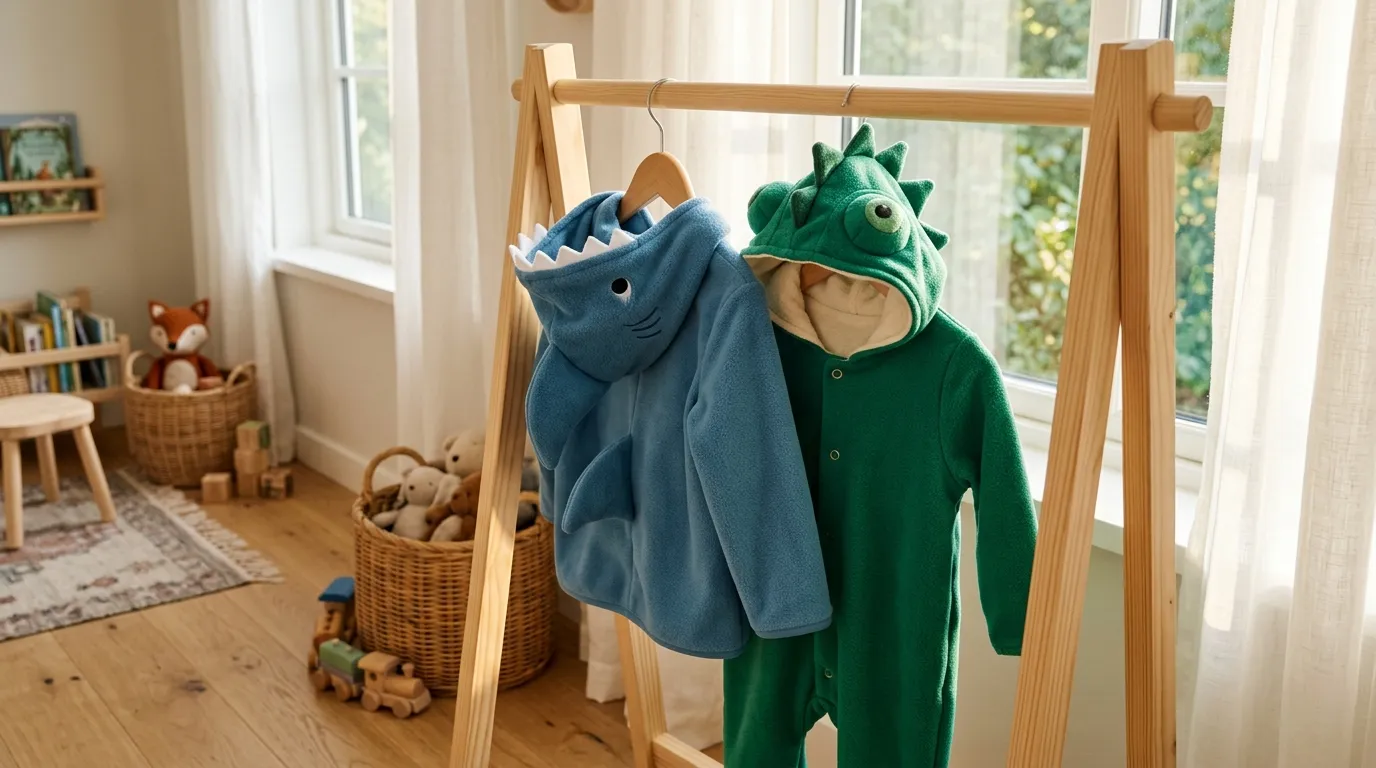
- 3. The Center of Gravity of Three-Dimensional Ear, Eye, and Fin Details (Gravity Pull): In hooded animal costumes such as the Fleece Chameleon Jumpsuit with Rolled Tail, Blue Fleece Octopus Costume, or Long-Eared Bunny Jumpsuit, the top of the hood features three-dimensional ears or eyes. If the inner filling of these ears is made from a heavy material, or if the hood pattern is cut deeper than necessary, the weight of the ears either pulls the hood backward toward the nape or tips it forward onto the forehead, blocking the child's field of vision.
- 4. The Pulling Force Between the Jumpsuit Body and the Hood: In one-piece hooded jumpsuits, if the body length from shoulder to crotch is too short for the child, the back fabric becomes taut whenever the child bends over and pulls the hood downward (backward), causing it to slip off the child's head.

2. Hat and Cap Securing Technology Without Squeezing the Child: Inner Sweatband and Rear Elastic Gather
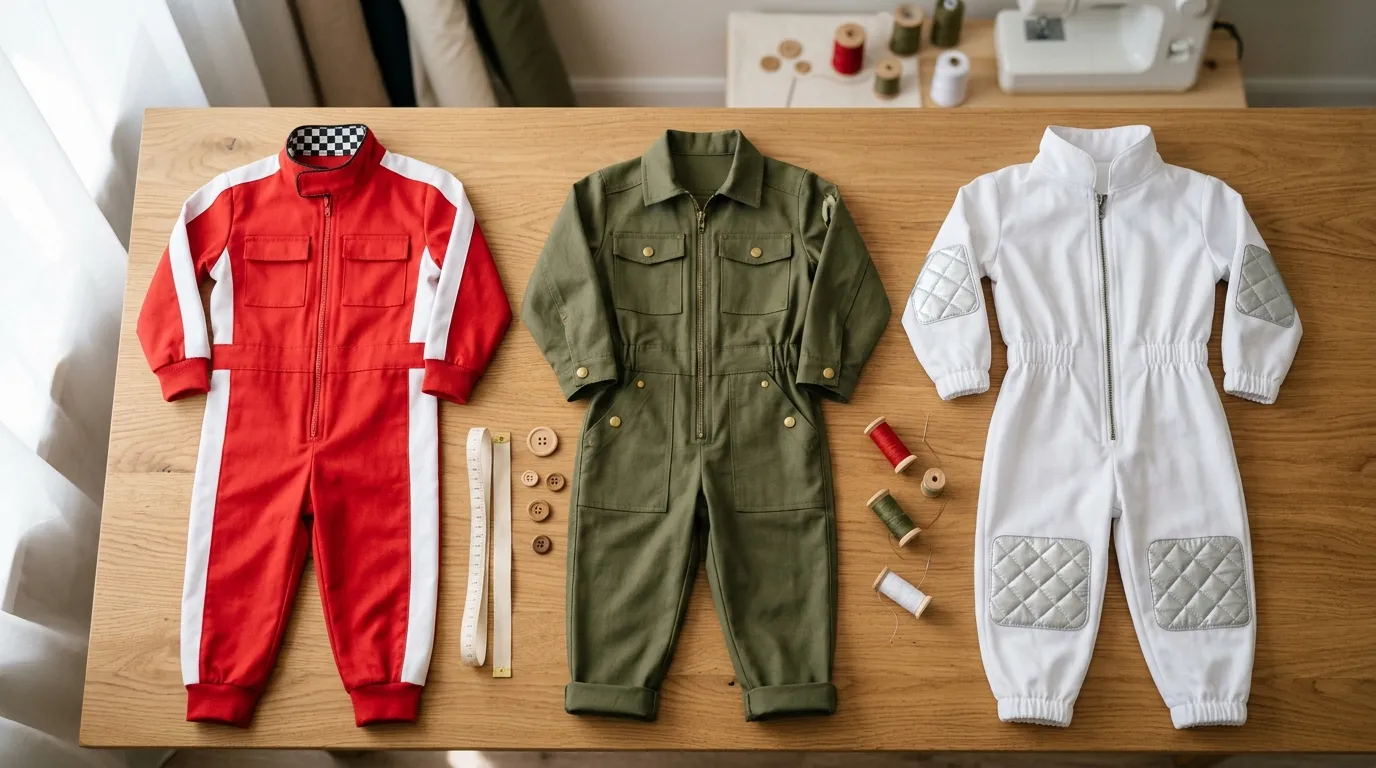
When a child wears a 1st Birthday Green Aviator Pilot Jumpsuit, Green Police Officer Uniform, or Red Race Car Jumpsuit at a birthday party, the hat or cap needs to be "so light and soft that it is easy to forget it is there" for the child to want to keep it on for hours. So how does a hat stay securely in place without squeezing the head?
A. Natural Grip with a 100% Cotton Inner Sweatband
Synthetic linings make a child's forehead sweat (a sweaty child will immediately remove a hat because of the itchy feeling) and also slip over the hair. However, when a combed 100% cotton gabardine or soft cotton jersey strip is used in the inner band that touches the forehead and temples, cotton's naturally micro-fibrous surface creates gentle friction (grip) with the hair strands. At the same time, it instantly absorbs moisture produced during play, keeping the forehead dry and cool.
B. An "Elastic Nape-Hollow Gather" Instead of Elastic All Around
Adding stiff elastic around the entire circumference of a hat (360 degrees) is a major design mistake because it puts pressure on the blood vessels over the forehead bone. In proper pattern engineering, the front (forehead) section of the hat is left smooth and flat; only the 8–10-centimeter section at the back nape is fitted with a soft-tension hidden elastic gather suitable for baby skin, or a micro-hook-and-loop/slider adjustment band. This allows the hat to gently grip the natural curve at the lower back of the head (the occipital hollow) without applying any pressure to the forehead.
C. 3 Practical Non-Slip Tips for Existing Costume Hats at Home
If your child's head circumference falls between two sizes or their hat moves slightly because of very fine hair, there are three excellent methods you can apply at home in 1 minute:
- Silicone Non-Slip Strip (Gripper Tape) or Fabric Tape on the Inner Band: Attach a small 5-centimeter piece of thin, soft, wavy silicone ribbon, sold in haberdashery shops and also used inside baby headbands, to the front inner band of the hat (or the side temple areas) with two small stitches. The silicone texture stops slipping completely without sticking to or pulling the hair.
- Hidden "Snap-Clip Bridge" Method for Girls: For the Green Aviator Pilot Dress with Ruffles for Girls or sailor/police caps, sew a small ribbon loop into each side of the hat's inner lining, then pass a snap clip matching the child's hair color through each loop. When putting on the hat, gently closing the snaps onto the side strands of hair keeps the hat from moving even a millimeter, even if the child does a somersault.
- Correct Positioning of Goggle and Ear Accessories: Positioning the decorative fabric or leather aviator goggles on pilot hats at the seam just above the forehead brim, rather than at the very top of the hat, lowers the center of gravity and prevents the hat from tipping backward.
3. What Should a "Balanced Hood" Pattern Look Like for Animal and Character Costumes?
Unlike hats, hooded children's costumes (Shark Hoodie Sweatshirt, Blue Monster Outfit, Purple Chameleon Jumpsuit, Girls' Fox Costume with Hooded Vest, and Holographic Sequin Octopus Costume) are sewn to the body; therefore, they cannot fall off and get lost, but they can still "fall backward" or "tip forward and cover the eyes."
These are the 3 golden pattern rules we apply when designing hooded costumes at the Tiny Trail Kids studio:
- Three-Dimensional Details Filled with Feather-Light Microfiber: The chameleon eyes, fox ears, monster horns, or shark teeth and fin details on the hood are filled not with heavy foam but with hypoallergenic siliconized microbead fiber, which has almost no weight. This keeps the ears and fins upright without adding extra weight to the hood.
- Three-Piece Anatomical Hood Cut (3-Panel Hood): Pointed hoods with a single center seam (two pieces) sit like a tent on a child's head and cover the face when the child turns from side to side. In contrast, an anatomical hood pattern with a center strip that follows the upper curve of the head (3 panels) fully wraps around the child's head. Wherever the child turns their head, the hood turns with it and never blocks their peripheral vision.
- Collar and Under-Chin Zipper/Snap Height: The most important locking point preventing the hood from sliding backward from the shoulders is the front collar connection under the neck. When the jumpsuit's front zipper is pulled up to under the chin (with a soft zipper guard that does not constrict the throat), the side walls of the hood remain at cheek level and do not fall backward, even while running.

4. How to Measure Head Circumference at Home by Age Group (Ages 1–8 Guide)
When ordering a personalized costume, checking your child's head circumference so the hat or hood fits perfectly takes only 15 seconds:
- Correct Tape Position: Wrap a soft tailor's measuring tape in a complete circle around your child's head, passing it approximately 1.5–2 centimeters above the eyebrows (across the center of the forehead), just above the ears, and over the most prominent point at the back of the head.
- One-Finger Comfort Allowance: Do not pinch the skin while joining the tape; leave a natural comfort allowance of approximately 0.5–1 cm, enough for the tip of your index finger to fit comfortably beneath the tape.
- Average Children's Head Circumference Reference by Age: Although every child's development is unique, general textile standards indicate an average head circumference of 46–48 cm for 1-year-old (12–18-month-old) babies, 49–51 cm for 2–3-year-old children, 51–53 cm for 4–5-year-old children, and approximately 53–55 cm for 6–8-year-old children. When you add your child's head circumference measurement in centimeters to your order note, our studio prepares the hat pattern according to that exact measurement.
5. Parent Tips for Helping Children Happily Wear Their Hats at Photo Shoots and Parties
No matter how perfect the hat's pattern and comfort are, babies—especially 1- and 2-year-olds—may instinctively feel around with their hands and try to remove an unfamiliar accessory when it is placed on their heads for the first time. To help the hat stay on during the photo shoot and while blowing out the candles, you can follow these psychological preparation steps:
- 1. "Mirror and Role-Play" Practice 2 Days Before Party Morning: Do not put the hat on your child for the first time at a crowded party venue or under a photographer's flashes! One or two days before the party, put a hat on yourself at home and play "Pilot salute" or "Racer's steering wheel" together in front of a mirror. A child who becomes accustomed to their adorable reflection in the mirror will accept the hat as a natural part of the costume on party day.
- 2. The "Hands Full" Rule for the First 10 Seconds After Putting on the Hat: The first 5–10 seconds after placing the hat or hood on the child's head are the most critical; the child will instinctively reach for it. As soon as you put on the hat, give the child a favorite toy car, plush airplane, or balloon in both hands. After 15 seconds, a child whose hands are occupied with a toy will completely forget that the light, soft hat is on their head!
- 3. Managing the Headpiece According to Room Temperature: If a child has been running continuously for 20 minutes in an indoor play area and is sweaty, the human body releases most of its heat through the head. During running breaks, slightly lower the hood toward the back to let the child's head cool, then put it back on for photos or cake time to maximize comfort.
6. Washing and Shape-Retention Guide for Hat, Cap, and Hooded Costumes
To ensure that the anatomical shape of a personalized costume hat or three-dimensional animal hood that grips the head remains intact for years, pay attention to the following cleaning and storage rules:
- Do Not Put Brimmed Hats and Caps in the Washing Machine: The Police Officer Cap, pilot caps, and racing caps contain special shape-retaining interlinings in their front brims and crown shapes. The washing machine's high-speed spin cycle can break these brims. Clean hats and caps by wiping them with lukewarm soapy water and a soft cloth (or sponge), then place a ball of dry paper towel inside and leave them to dry in their natural shape at room temperature.
- Drying Three-Dimensional Hooded Fleece Jumpsuits: After washing models such as the Shark Hoodie Sweatshirt, Green Chameleon Jumpsuit, and Fleece Bunny Jumpsuit on a delicate cycle at 30 degrees, do not put them in the dryer; high heat reduces the elasticity of the rear nape bands and stiffens the fleece texture. Gently reshape the bead-fiber-filled ears and eyes inside the hood with your fingertips and allow the garment to air-dry naturally.
7. Frequently Asked Questions (FAQ)
My child does not like wearing hats or headbands at all; which costume models should I choose?
Some babies and young children may immediately want to remove standalone hats or headbands that touch their foreheads because of sensory sensitivities. In such cases, our hooded models with broad, soft cotton or fleece linings that rise naturally from the shoulders without squeezing the head (Shark Hoodie Sweatshirt, Girls' Fox Costume with Hooded Vest, or Gamer Fleece Hooded Sweatshirt) or our Personalized Racer Jumpsuits and Astronaut Space Jumpsuits, which retain their full concept through the rich embroidered patches on the chest and back even when the hat is removed, are ideal choices. Even if the child wears the hat only for a 2-minute family photo and then runs around without it, the costume loses none of its overall effect.
Will hooded costumes get too hot inside or make my child's head sweat while running?
Whether the head area gets sweaty depends entirely on the breathability of the inner lining. In the hooded designs produced in our studio, soft fabrics that allow air circulation are preferred for the inner surfaces touching the child's hair and nape. In addition, since the front zipper of our hooded jumpsuits can be opened to any desired level, you can lower the zipper slightly to chest level in warm, enclosed party venues, immediately providing refreshing airflow around the neck and head.
Can I provide custom measurements when ordering so the hat is not too large or too small for my child's head?
Absolutely! Since all our designs are handmade from scratch in our studio after you place your order, simply write your child's head circumference in centimeters in the order notes (or personalization) section. Our artisans will adjust the hat's inner band and rear elastic allowance precisely to your child's head measurement before shipping.
Can a chin strap be added so the hat does not blow away at an outdoor or windy garden birthday party?
For birthday parties held outdoors in spring and summer, on a boat, or in a windy garden, adding a soft cotton ribbon tie or thin elastic cord that does not irritate the skin to the two side inner linings of the hat is an excellent solution, especially for active babies aged 1 and 2. If you mention in your order note that you would like a hidden inner tie for an outdoor event, a soft securing strap that folds inward and remains invisible during photo shoots can also be added.
To discover all our handmade personalized costumes that stay on your child's head during play, leave no marks on the forehead, and look perfect in photos, visit our Tiny Trail Kids collection.