
Tiny Trail Kids • November 25, 2026 • 13
What Is Costumed Storytelling for Kids and How to Build a Home Story Stage? Expressive Play Guide

Executive Summary: Few everyday play rituals nurture expressive vocabulary, narrative sequencing, emotional empathy, and confident public speaking as naturally as costumed storytelling for kids. When a child steps off the sofa and slips into a woodland fox outfit, floppy-eared white bunny onesie, flower-trimmed purple chameleon jumpsuit, friendly spotted blue monster set, or nautical sailor dress, they transform from a passive listener into the author and director of their own living-room play. With nothing more than a linen doorway curtain, painted story stones, and warm lamp light, any home corner becomes an enchanting family story theater.
What Is Costumed Storytelling for Kids? Moving from Story Listener to Story Creator
Reading bedtime picture books aloud is one of early childhood's sweetest daily anchors. During traditional read-alouds, however, young children mostly absorb someone else's plot—listening, pointing at illustrations, and answering occasional prompts. Costumed storytelling (expressive dramatic narration) flips that script completely, inviting your child to invent characters, improvise plot twists, experiment with expressive voices, and solve imaginary problems in real time.
Speech-language pathologists emphasize that preschoolers and early elementary children think most fluently when abstract language is anchored in tangible physical movement. Ask a four-year-old sitting in regular clothes to "Make up a story right now," and they will often freeze or giggle shyly after a single sentence. Yet the instant that same child puts on our girls' orange tutu skirt and vest woodland fox costume or zips up our personalized white fleece bunny onesie with floppy ears, catching sight of their ears or swirling skirt in the mirror sparks immediate narrative ideas. Hopping across the rug or peeking around a curtain supplies the opening action before a single word even needs planning.
Best of all, home storytelling requires zero memorized lines or rehearsal pressure. The goal is never a polished stage performance—it is discovering the magic of "beginning, unexpected problem, and joyful resolution" through play. Preparing for a classroom literary parade too? Pair these ideas with our preschool Book Week fairy-tale costume guide, and discover how character play gently supports quieter kids in our guide to building confidence in shy kids through dress-up play.
Five Lasting Developmental Benefits of Costumed Storytelling at Home
Setting aside just twenty minutes once or twice a week for living-room story theater strengthens five foundational childhood skills simultaneously:
- Rich Descriptive Vocabulary & Complex Sentences: Everyday toddler chatter relies heavily on basic verbs like "went," "got," and "saw." Stepping into the boots of a sea captain or woodland creature naturally unlocks vivid action words and sensory adjectives—"tiptoed beneath mossy branches," "steered across sparkling waves," or "whispered a secret clue."
- Perspective-Taking & Emotional Empathy: Inhabiting another character is hands-on practice in Theory of Mind. Asking "Why did the spotted blue monster feel nervous on his first day in the forest?" lets children explore big feelings safely from one step removed.
- Sequential Plot Architecture (Early Literacy): Organizing events using "first, suddenly, next, and finally" builds the exact cognitive scaffolding children later rely on for reading comprehension and creative writing in primary school.
- Vocal Modulation & Expressive Body Language: Switching between a tiny mouse whisper, a brave sailor call, and a gentle breeze sound teaches breath pacing, volume awareness, and expressive gesture naturally.
- Warm, Unhurried Family Connection: When parents put phones away, sit cross-legged on floor cushions, and applaud genuinely, children receive the unmistakable message that their imagination matters deeply.
How to Build a Home Story Stage in Five Minutes: Four Cozy Setups
Creating an inviting storytelling nook never requires carpentry tools, bulky wooden risers, or permanent playroom clutter. You can assemble and tuck away any of these four charming Scandinavian-inspired stage setups in minutes:
1. The Tension-Rod Linen Doorway Theater
Fit a spring-loaded tension curtain rod across a bedroom or hallway doorway at adult shoulder height and hang two lightweight cream or terracotta linen panels tied back with cotton twine. Draping battery-powered warm LED fairy lights along the top bar creates instant theater magic—giving your child a real "backstage" entrance and dramatic curtain reveal.
2. The Evening Backlit Shadow-Play Sheet
Drape a plain white cotton sheet across two dining chairs and place a single cool-to-the-touch LED desk lamp three feet behind the fabric to create a mesmerizing living-room shadow stage! When a child wearing our black-and-orange vest, pants, and flowing pumpkin cape set from our party and special occasion collection—or long floppy bunny ears—moves behind the glowing sheet, their expressive silhouette looks straight out of a storybook illustration. See how lightweight sculptural silhouettes enhance motion in our fleece animal jumpsuits and character hoodies guide.
3. The Montessori Floor Cushion Story Circle
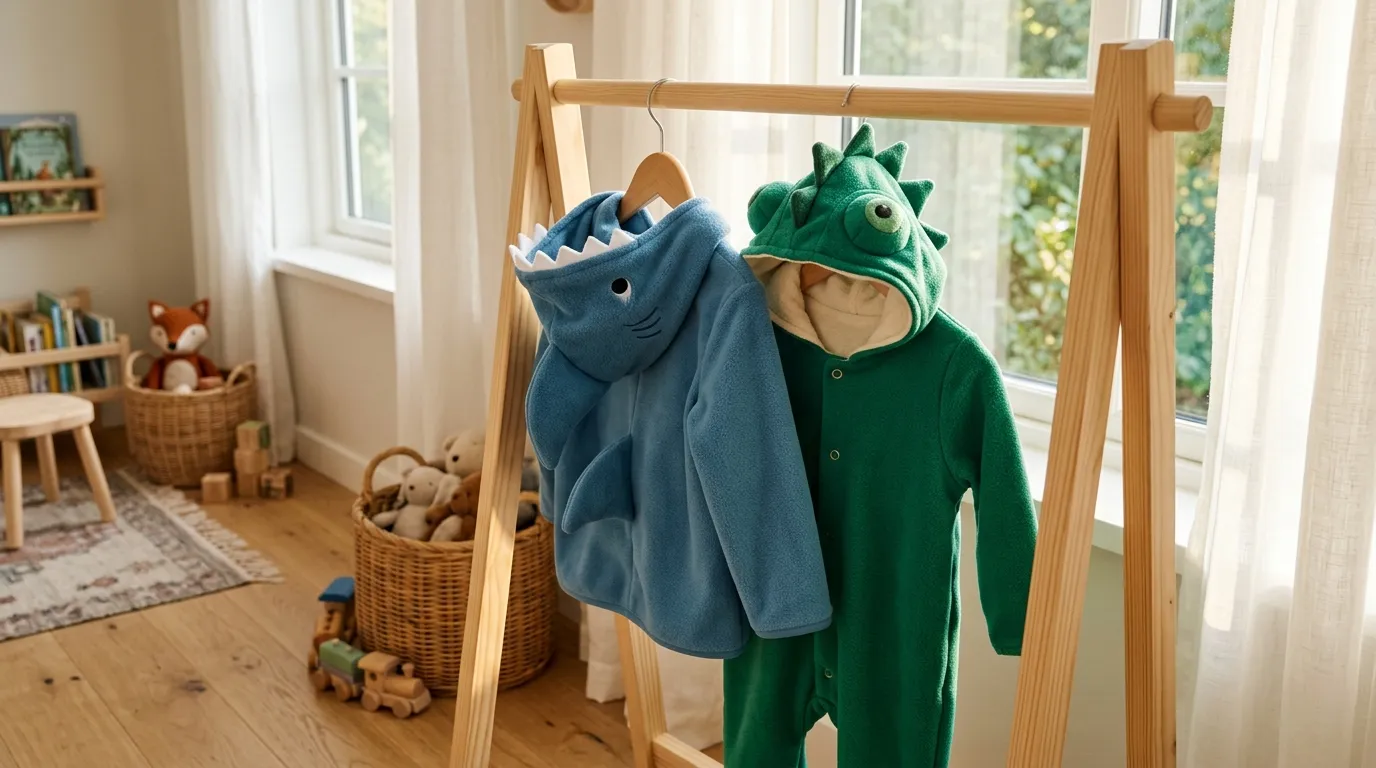
Toddlers aged two and three often feel safest narrating at floor level rather than standing in front of an audience. Arrange three soft linen cushions around a woven wool rug beside a low wooden garment rack holding two or three handmade costumes at child height so little storytellers can choose their own role freely.
4. The Tabletop Puppet & Narrator Duo Frame
Cut a curved stage window into a sturdy cardboard box and let your costumed child stand beside the box holding a felt finger puppet. Dialoguing with a tiny owl or star puppet takes the spotlight pressure off shy speakers and sparks hilarious back-and-forth banter.

Character Story-Starter Prompts & Prop Pairing Matrix
Whenever a young narrator steps through the curtain and pauses wondering how to begin, a gentle open-ended prompt sets the plot rolling immediately. Pair beloved silhouettes from our handmade children's costume collection with these ready-to-use story sparks:
| Costume Character | Simple Household Prop | Open-Ended Story-Spark Question | Social-Emotional Theme |
|---|---|---|---|
| Woodland Fox (Tutu & Vest) | Small woven basket, pinecones, and felt leaves | "Little Fox found a glowing golden acorn beneath the oak tree—who lost it in the forest today?" | Kindness, problem-solving, and nature care |
| Spotted Blue Monster Set | Soft throw pillows and plush felt stars | "Everyone thought the blue monster was loud, until they heard the silly lullaby he hums when he gets giggles—how does it go?" | Turning nighttime worries into playful humor |
| Purple Flower Chameleon | Colorful silk play scarves and a wooden magnifying glass | "Hiding among the garden blossoms, what secret surprise did the purple chameleon spot before anyone else?" | Mindful observation, patience, and friendship |
| Nautical Sailor Captain | Cardboard spyglass, blue sheet waves, and wooden boat | "Peering through the telescope, the Captain spotted a floating musical island—what animals greeted the boat ashore?" | Courage, teamwork, and imaginative voyage |
Combining Story Stones and Wordless Picture Books with Dress-Up Play
One of Montessori and Reggio Emilia educators' favorite storytelling catalysts is a drawstring pouch of painted story stones. Gather six smooth river pebbles and paint a single wordless icon on each stone—a crescent moon, a pine tree, a sailboat, a golden key, a rainbow, and a star—with zero letters or text.
After your child slips into a cozy piece from our heroes or animal costume categories—such as our spotted blue monster hooded top and pants, our purple fleece flower chameleon jumpsuit, or our personalized girls' white-and-navy sailor dress—have them draw three stones blindfolded from the bag: Stone One sets the scene, Stone Two introduces a twist, and Stone Three inspires the ending! And if your storyteller invents a tale about a hidden key or star crystal, extend the show straight into an active quest using our Montessori-friendly open-ended dress-up play guide.

Why Open-Face Hoods and Soft Seams Matter During Expressive Drama
Expressive narration requires three physical freedoms: clear voice projection, visible facial expressions, and zero distracting itchiness while sitting cross-legged or leaping across cushions. Rigid plastic masks muffle a child's speech and hide smiles, while scratchy synthetic necklines pull focus away from the story within minutes.
Every character hoodie, polar fleece onesie, and cotton dress sewn at our Tiny Trail Kids Antalya workshop frames the face openly so every whisper, grin, and dramatic gasp shines clearly across the room. Learn more about our itch-free interior construction in our cotton and polar fleece fabric selection guide for kids' costumes.
Playing "Pass-the-Wand Relay Stories": Golden Rules for Supportive Parents
A few simple habits turn parents and siblings into the ultimate encouraging audience:
- Say "Yes, And..." Instead of Correcting Logic: If a toddler Bunny announces that carrots grow on clouds, celebrate the surreal twist ("Yes! And how high did Bunny have to bounce to reach the biggest cloud carrot?") rather than correcting facts.
- Pass the Story Wand Around the Circle: Sit together in a circle and pass a wooden star wand; whoever holds the wand adds two sentences before passing it back to the costumed star.
- Offer Low-Pressure Backstage Roles on Quiet Days: Whenever a child feels shy, let them wear their costume as the official Ticket Collector handing out paper stars or the Curtain Opener—keeping them proudly included without performance pressure.
Sweet Family Tradition: Declare Friday evenings "Friday Curtain Call"—let your child hand out crayon-drawn picture tickets after dinner and perform a five-minute story for parents or grandparents on video call!
Exploring handmade characters for your home story corner? Browse sizing and custom personalization details on our frequently asked questions page or reach out anytime through our contact page.
Adding Homemade Acoustic Sound Effects to Living-Room Plays
Nothing elevates a living-room costume play faster than live acoustic Foley sound effects created with simple kitchen and playroom objects! Skipping digital speakers in favor of hands-on sound-making sharpens auditory listening and lets siblings collaborate as the "backstage sound crew":
- Rolling Ocean Waves: Whenever your Nautical Sailor Captain steers toward a mysterious island, tilt dried lentils or rice slowly back and forth across a wooden tray to conjure soothing coastal surf.
- Woodland Footsteps & Raindrops: As the Orange Woodland Fox, White Fleece Bunny, or Purple Chameleon tiptoes through an imaginary forest, tap two wooden blocks lightly for trotting paws or drum fingertips gently across a cardboard box for sudden spring rain.
- Swirling Wind Transitions: Whooshing a silk play scarf or billowing cape through the air signals dramatic scene changes without needing a single spoken stage direction.
Capturing Spoken Tales in a "First Storybook Journal"
Between ages three and seven, children invent hilariously poetic phrases inside dress-up play that vanish the moment bedtime arrives unless someone jots them down. Keep an unlined kraft sketchbook beside your story corner as your family's Costume Story Anthology. Right after applause wraps up, transcribe your child's tale word-for-word on the left page—complete with the date and which costume they wore—and invite your storyteller to draw their character's adventure on the facing page while still dressed up. Over a single year, you will build a treasured handwritten volume of your child's earliest original stories.
Frequently Asked Questions
What age is best to start costumed storytelling games at home?
Toddlers as young as two love acting out simple animal movements and sounds (hopping like a bunny, swishing a cape), three- and four-year-olds string together playful mini-adventures, and five-to-seven-year-olds invent hilarious multi-scene plays with siblings.
How can I gently encourage a child who freezes once the curtain opens?
Skip "Go ahead, tell us a story" and instead hold up a tiny puppet or plush toy that asks your child's character a silly question ("Excuse me, Captain Sailor, did you see where my little wooden boat drifted?"). Answering in character removes stage fright instantly.
What type of lamp is safest for living-room shadow puppetry?
Always use a cool-running LED desk lamp or wide-beam LED flashlight positioned at least three feet behind the cotton sheet, safely clear of pillows and walking paths.
Which costumes work best year-round for indoor storytelling corners?
Plush fleece styles—like our white bunny onesie, spotted blue monster set, and purple flower chameleon jumpsuit—feel cozy like pajamas on cool evenings, while our orange fox vest-and-tutu set, pumpkin cape trio, and cotton sailor dress stay light and breezy in warmer months.
What if siblings choose completely unrelated costumes for the same play?
Mismatching themes create the funniest, most memorable family stories! "How the Astronaut Helped the Woodland Fox Find Moonberries" or "The Race Car Driver and the Ocean Octopus" spark far richer creativity than matching scripts ever could.