Tiny Trail Kids • November 25, 2026 • 13
What Is a Costumed Treasure Hunt and How to Set One Up Indoors or Outdoors? Clue & Mission Guide

Executive Summary: Few childhood activities blend critical thinking, spatial navigation, gross-motor energy, and pure storytelling magic quite like a costumed treasure hunt. Unlike a simple game of hide-and-seek, dressing your child as an astronaut, aviator, woodland fox, chameleon, or race-team captain transforms every clue card into a live story mission. Using picture-icon trails for pre-readers or rhyming map riddles for early elementary kids, parents can set up a 45-to-60-minute screen-free adventure inside a cozy apartment living room or sunny backyard in under fifteen minutes.
What Is a Costumed Treasure Hunt? Why Story Missions Beat Ordinary Scavenger Lists
On rainy weekends or lively birthday afternoons, parents often face a familiar balancing act: left completely unstructured, excited kids quickly bounce off the walls; seated at a rigid table activity, they lose focus within ten minutes. A costumed treasure hunt (interactive clue and mission trail) bridges movement and focus seamlessly—inviting children to run, crouch, observe, and decode clues step by step toward a shared discovery.
In a standard scavenger hunt, saying "Go find five plastic stars hidden around the room" feels like a quick tidy-up task. The moment your child zips up a personalized white astronaut space jumpsuit, however, that exact same living room becomes an orbital space station where five lost star-chart crystals must be recovered to power the lunar rover home. Developmental psychologists highlight this combination of embodied role-play and goal-directed sequencing as a powerhouse workout for executive function—strengthening working memory, flexible problem-solving, and frustration tolerance.
Best of all, costumed clue trails scale effortlessly: you can run a cozy solo quest on a quiet Sunday morning or turn eight energetic party guests wearing outdoor and garden party kids' costumes into a cooperative expedition crew. For even more indoor active-play inspiration, pair these trails with our screen-free dress-up games at home guide.
How to Set Up a Costumed Treasure Hunt in Five Effortless Steps
Designing a memorable treasure hunt never requires elaborate craft supplies or hours of preparation. Using the classic "reverse-trail" method, you can build an entire adventure from everyday household props in fifteen minutes flat:
- Anchor the Trail in a One-Sentence Character Mission: Match the opening prompt directly to your child's outfit. For example: "Captain Pilot, a gusty cloud scattered five golden compass stars across the garden—can you recover them before takeoff?" Instant narrative purpose hooks attention immediately.
- Hide Clues Backwards from the Final Treasure Chest: To prevent mixed-up clues, always place the final treasure box in its hiding spot first (inside a play teepee or beneath an olive tree), then walk backward placing 5 to 7 clue envelopes so each card points cleanly to the next stop.
- Weave Mini Movement Challenges Between Clues: Keep kinetic energy flowing by adding playful physical prompts between stations—hop across three floor cushions like a woodland bunny, crawl beneath a dining-chair tunnel, or tip-toe silently past a sleeping plush bear.
- Match Clue Formats to Reading Stage: Use bold, wordless hand-drawn icons for toddlers and preschoolers so they never have to wait for a grown-up to read every card aloud, preserving their sense of independent triumph.
- Fill the Final Chest with Open-Ended Story Props: Skip sugar rushes in favor of tactile treasures that extend imaginative play afterward—wooden magnifying glasses, felt star badges, painted story stones, finger puppets, or bubble wands.
Four Ready-to-Play Treasure Hunt Scenarios Built Around Kids' Costumes
Every silhouette in our handmade children's costume collection naturally inspires its own discovery world. Try any of these four tested storylines indoors or outdoors:
1. Deep-Space Star-Map Recovery (Astronaut & Space Theme)
Suit up your young explorer in a crisp jumpsuit from our space costumes collection and dim the hallway curtains slightly to create a starlit spacecraft corridor. Cut six cardboard planet rings and tuck each one beside household landmarks; behind every planet is an icon leading to the next orbit until the crew unlocks Mission Control inside a fairy-lit canvas tent. Planning a classroom STEM celebration? Explore our preschool career day pilot, astronaut, and police costume guide for hands-on cosmic props.
2. Aerial Radar & Detective Clue Trail (Pilot & Police Theme)
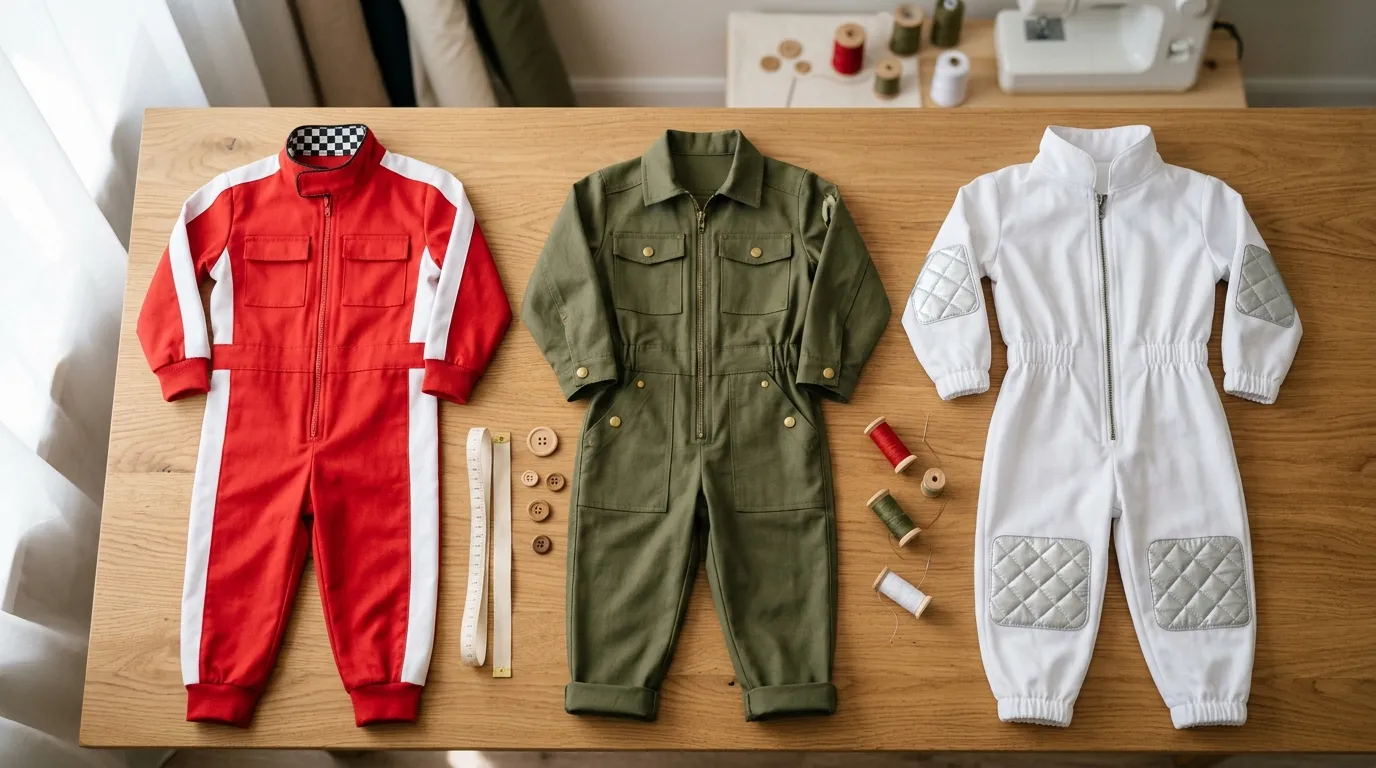
Children who love maps, flashlights, and solving mysteries thrive in structured Uniform & Rescue roles from our aviator and career costume category. A child wearing our personalized olive-green long-sleeve pilot flight suit can scan the room from a sofa "control tower" using toy binoculars, while a sibling or friend in our personalized green kids' police officer uniform follows paper footprint cutouts with a wooden magnifying glass to unlock the mystery chest.
3. Whispering Woodland & Camouflage Trail (Animals Theme)
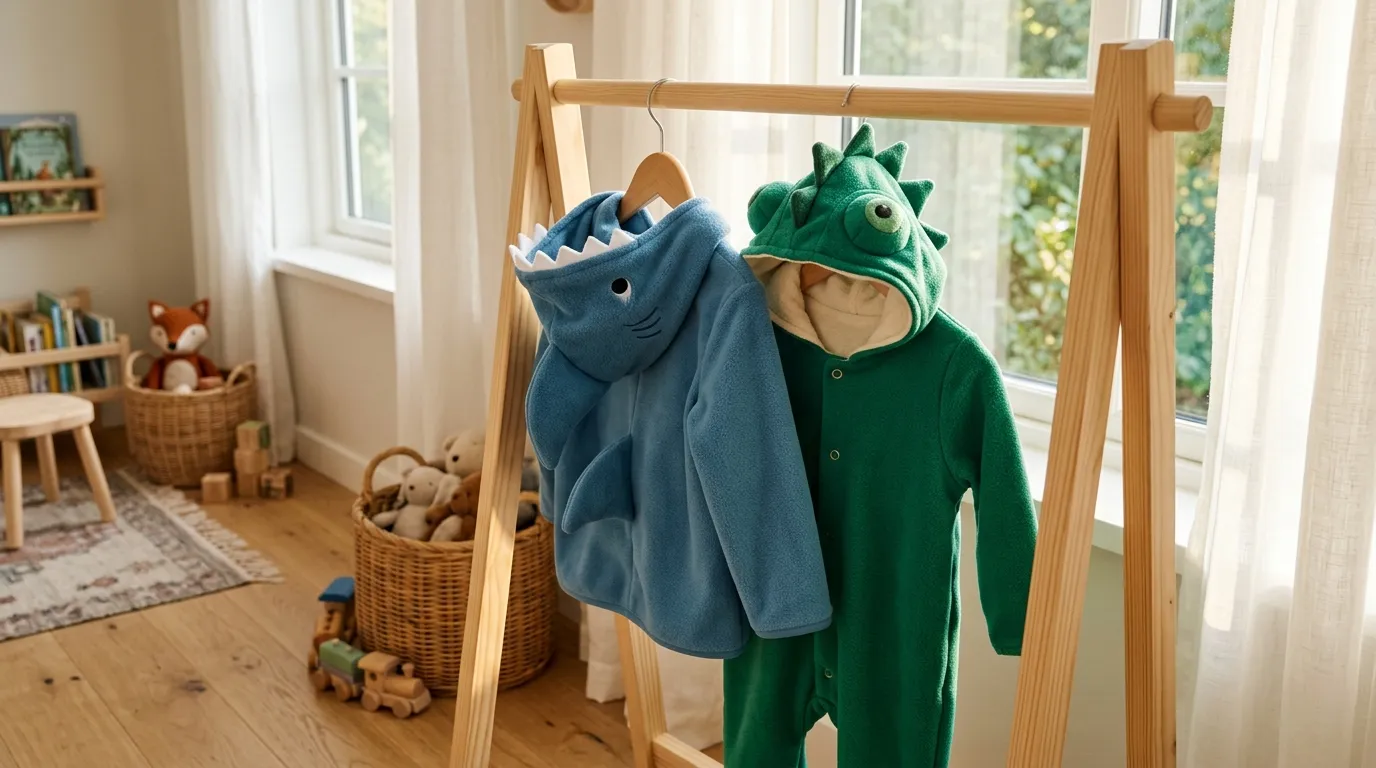
In a sunny backyard, courtyard, or plant-filled balcony, outfits from our handmade animal costumes turn nature observation into magic. Kids dressed in our girls' orange tutu and vest woodland fox costume or green fleece chameleon jumpsuit with curled spiral tail match tactile nature tokens—pinecones, smooth river pebbles, seashells, and fallen leaves—at each station. Little chameleons especially love spotting color-matched wooden tokens camouflaged against green flowerpots!
4. Five-Station Pit-Stop Checkpoint Rally (Race Car Driver Theme)
For high-energy birthday parties, zip your little racer into our personalized black race car jumpsuit with orange piping from our race car costume collection and set up five numbered pit-stop checkpoints: a hula-hoop tire hop, a balance-beam chicane, a checkered puzzle station, a water-cup refueling stop, and the winner's podium chest. Hosting a warm-weather outdoor rally? Check our comprehensive birthday costume selection guide for kids for breathable styling tips.

Age-by-Age Treasure Hunt Difficulty & Clue Design Matrix
Calibrating trail length and clue complexity ensures the hunt neither finishes in two minutes nor frustrates younger explorers. Use this age-graded framework to hit the sweet spot:
| Age Group | Ideal Station Count | Best Clue Format | Recommended Action Challenges |
|---|---|---|---|
| Ages 2 – 3 (Early Explorers) | 3 – 4 visible, nearby stops | Color-matching baskets and paper paw-print floor trails | Peeking under cushions, bunny hops on a rug, dropping felt stars into a bucket |
| Ages 4 – 5 (Preschool Detectives) | 5 – 6 multi-room or yard stops | Purely illustrated object icons (sketch of a boot rack, flowerpot, bookshelf, tent) | Assembling a 4-piece treasure map puzzle, stepping-stone balance walk |
| Ages 6 – 7 (Primary Adventurers) | 7 – 9 multi-step mission stops | Short rhyming riddles, bird's-eye room maps, and simple symbol decoder keys | Cooperative team clue combining, flashlight shadow decoding, obstacle relays |
Indoor & Backyard Trail Safety and Costume Mobility Tips
Whenever enthusiastic kids dash from clue to clue, safe station placement and unrestricted garment mobility keep the game smooth and scrape-free. Always place clue envelopes at child eye level or floor height—never near glass decor, steep stairs, electrical outlets, or high shelves that tempt climbing. Clear sharp coffee-table corners along hallways so children can crouch and turn freely.
Outdoors on grass, flagstones, and garden paths, costumes need durable stitching, breathable natural fibers, and secure ankle cuffs that never drag under sneakers. Every jumpsuit and hoodie handcrafted at our Tiny Trail Kids Antalya atelier is cut with generous knee-and-shoulder ease and finished with soft rib-knit cuffs so explorers can kneel beside terracotta pots or crawl into play tents effortlessly. Want to turn the treasures your child discovers into an evening show? Continue the adventure with our imagination and role-playing games guide for kids.

Running a Zero-Tears Cooperative Treasure Hunt at Group Birthday Parties
At multi-age birthday celebrations, traditional competitive hunts often result in the oldest child grabbing every envelope before younger guests even spot them. Three simple tweaks turn group hunts into harmonious teamwork:
- Color-Coded Token Collection: At every station, hide one small colored felt star per child rather than a single paper slip. Everyone collects their assigned color before the group unlocks the next picture clue together—guaranteeing nobody gets left behind.
- Rotating Station Captains: Assign each guest one station where they are the official Map Reader or Envelope Opener, ensuring every costumed character enjoys a moment in the spotlight.
- Shared Countdown Reveal: Have the entire crew count down from five together to lift the final treasure chest lid, revealing individually bundled keepsake pouches inside for every explorer.
Memorable Keepsake Idea: Present the birthday child—dressed in their personalized named jumpsuit—with an illustrated "Chief Expedition Captain" badge at Station One, then tuck that badge right beside their costume in their childhood memory box afterward.
Planning an upcoming birthday adventure or weekend playdate? Check sizing tips and custom production details anytime on our frequently asked questions page, or reach out to our team directly via our contact page.
Adapting Costumed Treasure Hunts Across All Four Seasons
One of the biggest reasons families fall in love with costumed clue trails is how effortlessly the exact same five-step blueprint adapts to snowy winter afternoons, breezy spring parks, sunny summer patios, and crisp autumn afternoons:
1. Cozy Winter & Rainy-Day Flashlight Star Trails Indoors
When winter dusk settles in by five o'clock, dim the overhead living-room lights and hand your costumed explorer a small kid-safe LED flashlight. A child zipped into a white astronaut suit can sweep their beam across hallway walls to spot hidden foil star cutouts, while a woodland fox or fleece chameleon crawls inside a blanket-draped dining-table "cave" to retrieve velvet clue pouches. Breathable cotton twill and cozy polar fleece keep indoor explorers warm without overheating during multi-room quests.
2. Spring & Autumn Botanical Sensory Trails Outdoors
During April blossom season or October golden-leaf weeks, turn backyard flowerbeds and courtyard paths into living nature museums. Wearing an olive-green aviator flight suit or green police uniform, children carry a small woven basket matching tactile natural specimens—a pinecones, a rosemary sprig, a smooth river stone, and a fallen maple leaf—to illustrated clue cards, blending imaginative role-play with hands-on outdoor mindfulness.
3. Sunny Summer Afternoon Splash & Pit-Stop Missions
On warm July and August afternoons, weave refreshing water challenges right into outdoor clues. Dressed in breathable short-sleeve racing or space rompers, young adventurers can transfer water with sponges at a "rocket refueling station" or melt ice cubes in warm bowls to free wooden star keys unlocking the final treasure chest under a shaded garden tree.
Bridging Sibling Age Gaps with Two-Tier Clue Envelopes
Families raising both a reading six- or seven-year-old and a busy two- or three-year-old toddler often wonder how to keep one child from solving every stop first while the younger sibling trails behind. The secret is the double-duty clue envelope: draw a bold colorful symbol (a yellow star, orange carrot, or blue wave) on the outside of every envelope so the toddler leads the visual search to spot it, then tuck a rhyming riddle inside that only the older sibling can read aloud to direct the team forward. Giving each child an essential, complementary role transforms sibling rivalry into proud teamwork from clue one to the final chest.
Frequently Asked Questions
Can 3- and 4-year-olds who cannot read yet play a costumed treasure hunt?
Yes—pre-readers actually love treasure hunts the most when clues use simple drawings instead of written words. Sketch a cushion, shoe rack, potted plant, or wooden chair on small kraft cards, and preschoolers will proudly decode every stop on their own.
Can we set up a great treasure hunt inside a compact apartment?
Absolutely. Even a single living room and hallway offer dozens of clever hiding levels—under throw pillows, behind curtains, inside a woven toy basket, beneath a dining-table blanket fort, or beside a bookshelf.
Which handmade costumes hold up best for outdoor backyard treasure hunts?
Breathable cotton twill jumpsuits (pilot flight suits, race car suits, astronaut jumpsuits, police uniforms) and washable anti-pilling polar fleece designs (chameleon jumpsuits, bunny onesies, shark hoodies) handle grass, kneeling, and active climbing beautifully.
How long should a children's costumed treasure hunt last?
Aim for 15 to 20 minutes for toddlers aged two to three, 30 to 40 minutes for preschoolers aged four to five, and 45 to 60 minutes with multi-step puzzle stations for six- and seven-year-olds.
What are the best non-candy prizes to put inside the final treasure chest?
Wooden magnifying glasses, felt star badges, painted story stones, finger puppets, glow-in-the-dark ceiling stars, bubble tubes, and wordless nature picture books keep imaginative play going long after the chest is opened.