Tiny Trail Kids • November 25, 2026 • 12
Potty-Training Friendly Kids' Costumes: Easy-On Designs for Toddlers

Potty training is one of the proudest independence milestones of early childhood, and it rarely unfolds inside a quiet, predictable bubble. Just as your toddler strings together a celebratory streak of dry mornings at home, the family calendar fills up with a friend's birthday party, a preschool dress-up parade, or an autumn festival. Suddenly, parents face an all-too-familiar dilemma: do you dress your little explorer in the themed costume they have been excited about for weeks and risk a frantic bathroom struggle, or skip the dress-up magic altogether?
At Tiny Trail Kids, our handmade design philosophy begins with a simple promise: families should never have to trade childhood imagination for bathroom practicality. The vast majority of event-day potty accidents do not happen because a toddler forgot how to use the toilet; they happen because complicated garment closures steal precious seconds from small, still-developing hands. In this complete guide, we explain why back-buttoned and stiff one-piece outfits trigger potty-training setbacks, break down the exact under-5-second independence features toddlers aged 2–4 can manage solo, compare two-piece sets against smooth front-zipper rompers, map out a Montessori self-dressing corner, and provide a grab-and-go spare outfit packing checklist for birthday parties and preschool.
Why Complicated Costumes Trigger Potty-Training Setbacks at Parties and Preschool
To an adult, unfastening three tiny buttons at the back of a collar or unzipping a narrow rear seam takes barely a second. For a 2-to-4-year-old whose fine-motor dexterity, bladder awareness, and emotional regulation are all maturing at the exact same time, inaccessible closures create an instant barrier. When a toddler is deeply absorbed in bubble play, birthday cake excitement, or cooperative pretend play with classmates, early body cues easily slip past conscious notice until urgency arrives all at once.
The 10-to-15-Second Urgency Window
Preschool teachers and early childhood specialists often describe the "10-second window" during active potty learning. Once a newly trained toddler realizes they need to go, half of those crucial seconds are spent pausing play, walking across a crowded room, and opening the restroom door. That leaves roughly 5 seconds to push bottoms down and get safely onto the seat. Hidden back zippers, neck ribbons, stiff non-stretch waistbands, bulky multi-layer petticoats, or complicated belt buckles slam that window shut before a toddler even reaches the toilet.
Sensory Overload Inside Unfamiliar Party Restrooms
Compared to a familiar home potty chair, a birthday venue or public restroom is a loud, overwhelming sensory environment. Roaring hand dryers, sudden automatic flushers, bright overhead lights, damp tile floors, and a line outside the stall quickly push a toddler close to sensory overload. Adding a snagging zipper, an itchy synthetic collar, or tight sleeves that refuse to budge tips a manageable bathroom break into full distress. Even one embarrassing party accident can spark days of withholding, refusal to use away-from-home restrooms, or sudden resistance to wearing fun outfits.
The Preschool Ratio Reality: Why True Self-Independence Matters
At home, a parent sits a few steps away ready to help with stubborn fasteners. In a busy preschool classroom, however, a single teacher may guide twelve to fifteen toddlers through bathroom transitions and outdoor gear at once. A child wearing easy-on handmade clothing handles their own waistband calmly, preserves personal dignity, and walks straight back to play feeling capable. A child trapped in back buttons must wait anxiously for rescue, which quietly erodes confidence during a pivotal developmental window.
The 5-Second Independence Rule: Features Toddlers Aged 2–4 Can Pull Down Alone
Before selecting or packing any handmade costume for a potty-training toddler, put every seam and closure through the 5-Second Independence Rule: can your child, using only their own hands and without adult coaching, get the outfit down safely in under 5 seconds and pull it back up afterward? Truly toddler-engineered garments share five unmistakable tactile features:
- Ultra-Wide 3.5–4 cm Cotton-Rib Elastic Waistbands: Thin, rigid elastic cuts into soft toddler tummies and twists inside narrow fabric tunnels, leaving nothing steady for small fingers to grasp. An ultra-wide, stitched-in cotton-rib waistband stays completely flat, hugs gently without leaving marks, and gives little thumbs a generous grip surface to push pants down in one effortless motion.
- Tapered Ribbed Jogger Ankle Cuffs: Wide-leg trousers drop straight onto damp restroom floors the moment a toddler sits down. Soft, tapered cotton-rib cuffs hold the hem neatly above the ankle so fabric stays spotless, dry, and safe from tripping hazards.
- Smooth Easy-Grip Front Zipper with Cotton Chin Guard: Whenever a design includes a zipper, it should run straight down the front—never the back—paired with a chunky, toddler-friendly pull tab, snag-free teeth, and a soft cotton inner backing and chin guard that protect delicate neck skin.
- Zero Real Drawstrings, Back Buttons, or Trailing Sashes: Functional drawstrings vanish inside waist tunnels or knot tightly when damp, while rear fasteners make independent toileting impossible. Decorative bows should be stitched flat, and every real opening—from smooth snaps to front zippers—should sit right in the child's line of sight.
- Slip-On Footwear Harmony and Tag-Free Soft Seams: Pairing cuffed bottoms with easy Velcro sneakers or slip-on shoes keeps transitions smooth, while soft interior seams and breathable cotton linings prevent itchy distractions so toddlers stay attuned to their body cues.
Running the Calm 5-Second Home Rehearsal
Never debut a brand-new costume for the very first time on party morning. Three to four days ahead of the celebration, turn outfit testing into a joyful afternoon game at home: "Let's see how fast our brave little shark can push his soft pants down and pull them right back up!" This relaxed rehearsal lets you verify waistband stretch, check cuff length over everyday shoes, and build calm muscle memory long before stepping into a noisy party venue.
Two-Piece Costume Sets vs. Easy Front-Zipper Rompers: Choosing by Stage
Potty readiness shifts dramatically between a toddler's second and fourth birthdays. A 26-month-old in their second week of cotton underwear benefits from a very different costume structure than a 3.5-year-old who reliably announces bathroom breaks several minutes ahead of time. Matching garment architecture to your child's current stage sets everyone up for relaxed success.
1. Hoodie and Elastic-Waist Jogger Sets (The Gold Standard for Active Training)
During the first six months of potty learning—and on every preschool dress-up day—soft two-piece sets remain the undisputed gold standard. The themed upper layer stays comfortably in place while the wide-waistband bottoms slide down in 3 to 4 seconds flat. A handmade coordinate like the Blue Monster Hooded Top and Pants Costume delivers playful head-to-toe character charm with zero back closures and completely stress-free restroom breaks.
Another wonderfully practical and season-flexible approach is pairing a handmade character hoodie directly with your toddler's favorite everyday elastic-waist cotton joggers. Crowd-favorite handmade tops such as the Personalized Blue Shark Hoodie with Fin, the Blue Fleece Ocean Octopus Hoodie, the shimmering Hologram Sequin Tentacle Octopus Hoodie, or the cozy Handmade Fleece Gamer Cosplay Sweatshirt let toddlers rely on familiar waistbands they already master every morning. Plus, if an outdoor birthday garden warms up at noon, peeling off a hoodie leaves the potty-friendly bottoms completely untouched.
2. Vest and Stretchy Tutu Skirt Sets & Easy Birthday Dresses
Skirts and dresses can be remarkably potty-friendly when built with soft elastic waistbands and worn over simple pull-down cotton shorts. With a joyful two-piece set like the Fox Orange Tutu Skirt and Vest Toddler Costume, little hands simply gather the lightweight tulle up toward the tummy and slide down breathable underwear or bike shorts while the vest stays neatly on the shoulders. The exact same smooth strategy works with breathable celebration dresses like the Personalized White and Navy Sailor Dress, the Personalized Olive Green Birthday Dress, or the festive Personalized Black Sequin Dress with Velvet Bows—simply swap tricky tights for easy cotton shorts and knee socks.
3. Pull-On Cape, Vest, and Elastic Pants Trios
Layered cape costumes are secret heroes of the potty-training years because the dramatic outer layer unfastens cleanly at the bathroom threshold in a single second. In a thoughtfully tailored trio like the Pumpkin Cape, Vest, and Pants Costume, the smooth neckline snap releases immediately so the cape never grazes wet bathroom floors, the soft vest stays put, and the stretchy elastic pants glide down right on schedule. Easy-on capes also nurture emotional confidence beyond the bathroom—discover how imaginative dress-up builds bedtime courage in our guide to hero costumes and bravery play for kids afraid of the dark.

4. When Smooth Front-Zipper Rompers and Jumpsuits Make Sense
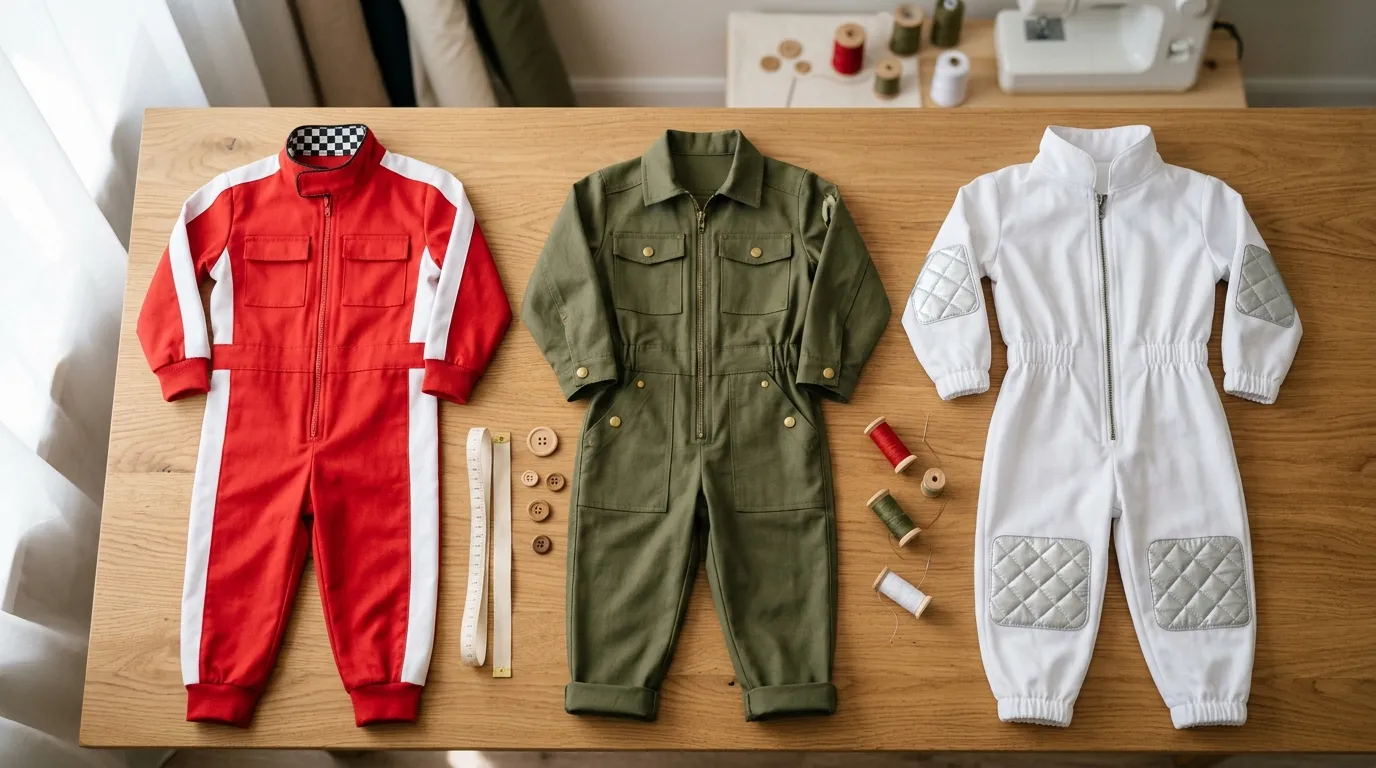
What if your toddler dreams of celebrating as a race car driver, space explorer, pilot, police officer, cuddly bunny, or colorful chameleon? You never have to rule out one-piece costumes—you simply want a generously cut, smooth front-zipper design aligned with your child's readiness. Handmade front-zip classics such as the Personalized White Short-Sleeve Race Car Jumpsuit, Short-Sleeve White Astronaut Space Suit, Personalized Long-Sleeve Astronaut Jumpsuit, Personalized Olive Green Pilot Jumpsuit, Personalized Green Aviator Girls' Jumpsuit, Personalized Black Reflective Race Car Jumpsuit, Personalized Red Long-Sleeve Race Car Jumpsuit, Personalized Green Police Officer Uniform, Personalized White Fleece Bunny Onesie, Green Chameleon Fleece Jumpsuit, and Purple Chameleon Fleece Jumpsuit perform wonderfully when introduced at the right moment.
Three Readiness Signs for Moving from Two-Piece Sets to Front-Zipper Jumpsuits: (1) your toddler reliably gives 3 or more minutes of warning before needing a bathroom, (2) they can pull an easy-grip front zipper smoothly down to the waist without pinching, and (3) you have rehearsed the "lap-tuck sleeve trick" at home. Once unzipped to the lower tummy and slipped off the shoulders, fold the upper bodice forward onto your toddler's knees and let them hold both sleeves gently in their lap while seated. That one habit keeps jumpsuit sleeves completely clear of public restroom tiles. In warm months, short-sleeve front-zip jumpsuits cut fabric bulk in half for even quicker pit stops.
Practical Toddler Costume Comparison Table
Use this side-by-side reference to match your child's current potty-training stage with the calmest, cleanest, and most self-sufficient costume structure:
| Costume Architecture | Pull-Down Time | Age 2–4 Independence | Floor-Contact Risk | Ideal Potty Stage | Key Comfort Benefit |
|---|---|---|---|---|---|
| Hoodie + Elastic Jogger Set | 3–4 seconds | Very high (full solo use) | Very low (ribbed cuffs) | Early training & preschool | Top stays on; pairs with daily pants |
| Vest + Stretchy Tutu Skirt (+ Shorts) | 4–5 seconds | High | Low (skirt gathers neatly) | Active training & parties | Breezy layers; instant bottom swap |
| Pull-On Cape + Elastic Pants | 4–5 seconds | High | Very low (cape comes off first) | Ages 2.5–4 pretend play | 1-second cape release; zero overheating |
| Short-Sleeve Front-Zip Jumpsuit | 8–12 seconds | Moderate–High (ages 3+) | Moderate (use lap-tuck trick) | Confident daytime routine | Light fabric bulk; seamless look |
| Long-Sleeve Fleece Front-Zip Onesie | 10–15 seconds | Moderate (best with nearby help) | Moderate (tuck sleeves firmly) | Ages 3.5+ or chilly outings | Cozy warmth; smooth front zipper |
| Back-Buttoned / Rear-Zip Costume | 25+ seconds | None (adult required) | High | Not recommended for training | High delay stress and setback risk |
Montessori Self-Dressing Confidence: Connecting Pretend Play and Potty Readiness
In Montessori early childhood philosophy, self-dressing and toilet learning belong to the exact same developmental journey: "Help me to do it myself." Every unhurried afternoon a toddler spends choosing a handmade outfit, hooking both thumbs into an ultra-wide cotton-rib waistband, and pulling cuffed pants over their knees builds the precise bilateral coordination and self-trust they rely on inside the bathroom.
The Dressing Bench Ritual: Turning Playtime into Muscle Memory
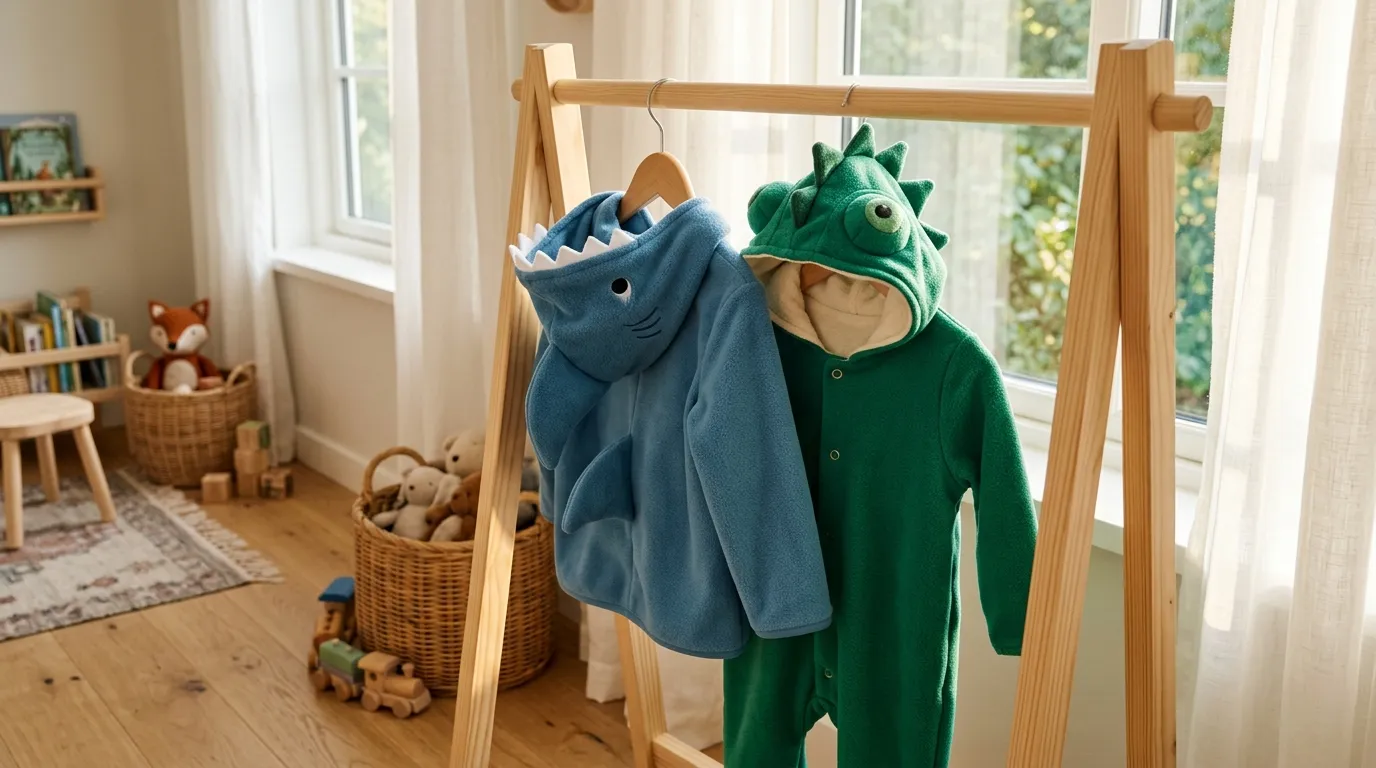
Creating a Montessori toddler dressing corner requires surprisingly little square footage: a sunlit spot with a low birch wooden rack positioned at shoulder height and a sturdy low bench right beneath it. Sitting on a low bench anchors a toddler's core stability so both hands are completely free to guide feet through tapered cuffs and slide elastic waistbands up over the hips. Curate the rack to just three easy-on handmade outfits—such as a fox tutu and vest, a shark hoodie, and a pull-on cape—so your toddler enjoys real autonomy without visual overwhelm.
As a parent, one of the most powerful habits you can practice is offering "10 seconds of silent wait time." Instead of jumping in the instant a waistband bunches slightly, pause warmly and let your child problem-solve, then celebrate with specific encouragement: "You hooked both thumbs inside your wide waistband and pulled your pants up all by yourself!" In homes with more than one child, watching an older sibling calmly dress in a coordinating handmade outfit multiplies motivation—explore sibling bonding ideas in our article on matching kids' costumes and cooperative pretend play for siblings.
Self-Dressing Milestones from Age 2 to 4
- 24–30 Months: Toddlers master sliding both thumbs inside an ultra-wide elastic waistband to push pants cleanly down to their ankles. Soft, tag-free two-piece outfits give them daily confidence wins.
- 30–36 Months: Children begin pulling elastic bottoms back up cleanly after using the potty, guiding arms independently into soft vests or character hoodies, and releasing simple shoulder or collar snaps.
- 36–48 Months: Fine-motor pincer strength matures enough to glide oversized front zipper pulls smoothly from chest to hip, manage the lap-tuck sleeve trick, and complete the entire restroom and handwashing sequence solo.

Birthday Party & Preschool Bathroom Strategy and Spare Outfit Packing Checklist
Even the smartest handmade garment shines brightest alongside a calm, predictable outing rhythm. Aim to arrive at birthday venues or community celebrations 10 minutes early so you can share a relaxed "bathroom scout" walk before music and excitement climb: "Look, here is where the little sink and potty live whenever our little fox or shark needs a quick pit stop!" Rather than asking "Do you need to go?" every ten minutes—which almost guarantees an automatic toddler "No!"—weave cheerful, matter-of-fact invitations into natural transitions every 45 to 60 minutes, such as right before cake cutting or before stepping in front of your party backdrop. If you are staging celebratory portraits, our guide to DIY kids' birthday photo backdrops and handmade costume styling shares effortless tips for relaxed, joyful frames between breaks.
Grab-and-Go Spare Outfit Packing Checklist
Packing thoughtfully means a small miss never forces your toddler out of their favorite character or cuts a celebration short. Tuck these eight essentials into an easy-reach exterior pocket of your party or preschool bag:
- Color-Matched Backup Elastic Bottoms: Pack a pair of soft cotton joggers or leggings that blend naturally with the costume top. Swapping only the bottoms lets your child rejoin the celebration proudly wearing their themed hoodie, vest, or cape.
- Two to Three Pairs of Breathable Cotton Underwear: Choose wide, gentle waistbands that mirror the easy grip of their outer pants.
- One Lightweight Backup Cotton Tee or Undershirt: Handy if a splash dampens the lower hem of the base layer.
- Zippered Waterproof Wet/Dry Pouch: Keeps damp items sealed cleanly and odor-free until you reach home.
- Folding Travel Potty Reducer Seat or Disposable Seat Covers: Many 2–4-year-olds tense up on oversized public toilets for fear of slipping in; bringing a familiar folding ring eliminates instant restroom refusal.
- Gentle Unscented Wipes and Soft Dry Tissues: Fast, irritation-free cleanup for sensitive skin and sticky frosting fingers.
- One Spare Pair of Grip Socks: Socks are almost always the overlooked casualty of small misses—fresh dry socks immediately restore physical comfort.
- Small Cloth Accessory Pouch: A clean, tidy spot to tuck a pull-on cape, crown, or soft mask while stepping inside a public stall.
The Calm, Shame-Free Accident Recovery Script
If an accident happens amid birthday excitement, your calm tone matters far more than any laundry load. Skip anxious exclamations like "Oh no, your new costume got wet!" and lean on a warm, neutral script instead: "Playtime was so exciting that your body sent a late signal—no problem at all. Our cozy matching spare pants are right here in the bag; let's change into dry clothes and head back for cake!" Inviting your toddler to pull those fresh elastic pants up with their own hands restores dignity in seconds. On preschool dress-up days, a quick two-sentence note to the teacher at drop-off ("She is wearing an easy two-piece elastic set today, and matching spare joggers are right in the front pouch") creates seamless teamwork all day long.
Fabric Breathability, Closure Safety, and Room-to-Grow Sizing
Once bulky diapers come off, toddlers immediately notice fabric texture, waist pressure, and warmth around their midsection. Stiff, non-breathable synthetic costumes trap heat and moisture against sensitive skin, causing itchiness and restlessness that pull attention away from gentle bladder signals. Natural cotton linings and soft, breathable handmade fleece allow airflow, maintain comfortable skin temperature, and keep your child serene through hours of active party play.
Careful handmade tailoring also stretches well beyond a single birthday afternoon. Ultra-wide cotton-rib waistbands and stretchy ankle and wrist cuffs gracefully accommodate toddler growth spurts—meaning a potty-friendly two-piece set tailored for a second birthday often stays in active rotation through preschool pretend play and passes cleanly to a younger sibling. Discover how to rotate, refresh, and preserve quality dress-up pieces across the years in our seasonal kids' costume rotation and hand-me-down care guide.
7 Common Mistakes Parents Make When Dressing a Potty-Training Toddler for Events
Even the most prepared parents can accidentally create friction around celebration bathrooms. Avoiding these seven common pitfalls keeps every outing smooth and upbeat:
- Skipping the Pre-Event 5-Second Rehearsal: Discovering on party morning that a waistband feels tight or a zipper sticks turns the very first bathroom run into panic. Always rehearse cheerfully at home a few days ahead.
- Layering Snap-Crotch Bodysuits Underneath Two-Piece Costumes: A onesie snapped between the legs completely cancels out easy pull-down pants. Once potty learning begins, switch exclusively to soft cotton tees or tank undershirts.
- Choosing Floor-Grazing Skirts or Trailing Capes: Excess fabric sweeps across damp restroom tiles the moment a toddler crouches. Stick to knee-length tutus, tapered ribbed jogger cuffs, and quick-release capes.
- Pairing Dress-Up Tops with Rigid Denim or Belt Buckles: Stiff jeans, snap-fly buttons, and decorative belts exceed 2–4-year-old finger strength. Always pair themed hoodies or vests with wide elastic-waist cotton or fleece bottoms.
- Assuming "I Will Be Right There to Unzip the Back": Toddlers thrive on personal autonomy even when parents stand nearby—and at preschool, teachers juggle multiple children at once. Independent front closures protect confidence everywhere.
- Reacting with Frustration Over a Wet Costume: Focusing worry on the garment plants shame around toilet learning. Keeping your voice steady while slipping into matching spare pants protects emotional momentum.
- Using Hot Water for First-Step Rinse Care: Hot water sets both odor and stains into natural and fleece fibers. Always rinse promptly in cool water, wash inside-out on a gentle 30°C cycle with mild detergent, and air-dry flat to preserve custom embroidery and stretchy rib cuffs.
Frequently Asked Questions
Are two-piece costumes always better than rompers during active potty training?
During the first 3 to 6 months of potty training—and anytime your toddler attends preschool independently—two-piece sets with 3.5–4 cm cotton-rib waistbands are almost always the smoothest choice because they pass the under-5-second independence rule effortlessly. Once your child consistently gives a few minutes of warning and glides a front zipper comfortably, generously cut front-zipper rompers become an easy, enjoyable option as well.
My toddler insists on wearing a race car or astronaut jumpsuit—how can we manage restroom breaks cleanly?
Pick a breathable, roomy front-zipper design (short sleeves are especially speedy during spring and summer) and rehearse the lap-tuck sleeve trick together at home before party day. Pair the outfit with upbeat, low-pressure restroom breaks every 45 to 60 minutes so your toddler never enters the stall in a frantic rush.
What should a potty-training toddler wear under a tutu skirt or birthday dress?
Soft, stretchy cotton bike shorts or pull-on bloomers with an ultra-wide elastic waistband work best. Skip slippery tights during active potty learning, since tights are notoriously tricky for 2-to-4-year-old hands to grip, push down cleanly, and pull back up without twisting.
How can I prevent bathroom anxiety when introducing a new costume before a birthday party?
Hang the handmade outfit on a low hook or Montessori rack several days before the celebration so your toddler can feel the soft fabric, slip it on during unhurried afternoon play, and practice a cheerful "pretend potty pit stop" at home. Familiarity replaces novelty jitters with proud confidence on party morning.
What should I do if an accident happens in a handmade fleece or personalized costume?
Keep your response warm and calm so your child feels supported rather than embarrassed, swap into your color-matched backup bottoms, and seal the damp piece inside a waterproof wet/dry pouch. At home, rinse promptly in cool water, machine wash inside-out on a gentle 30°C cycle with mild detergent, and air-dry flat so fleece softness, ribbed waistbands, and personalized details stay like new.
How do I set up a Montessori dressing corner in a small bedroom or playroom?
You only need about two feet of clear wall space: place a low child-height wooden rack above or beside a sturdy low bench, and display just two or three easy-on handmade outfits at a time. Keeping choices simple invites daily self-dressing practice and carries that exact "I did it myself!" pride straight into the bathroom.
Confident Steps, Joyful Play: Thoughtful Handmade Design with Tiny Trail Kids
Potty training should never mean pressing pause on birthday wonder, preschool dress-up days, or cozy living-room adventures. When handmade outfits are thoughtfully engineered around real toddler hands—with ultra-wide cotton-rib waistbands, tapered jogger cuffs, snag-free front zippers with cotton chin guards, and quick-release capes—every celebration becomes a gentle boost to your child's independence.
Browse our full range of breathable, toddler-friendly two-piece sets, cozy character hoodies, pull-on cape trios, and smooth front-zipper favorites on the Tiny Trail Kids collection page, or explore more family-tested guides across our blog archive. Curious about how our workshop crafts every stitch for active little explorers? Visit our About Us page, or reach out directly via our Contact page for personalized sizing and potty-friendly outfit advice.