
Tiny Trail Kids • November 23, 2026 • 13
Montessori Dress-Up Corner at Home: Fostering Independent Dressing in Kids

Key Takeaways:
- Child-Height Accessibility Sparks Autonomy: Designing a Montessori dress-up corner at home for fostering independent dressing in kids places an open wooden hanging rod 70 to 95 cm (28 to 37 inches) off the floor so toddlers and preschoolers can choose, put on, and hang up their own outfits without waiting for adult help.
- The 3-to-4 Costume Capsule Rotation Rule: Instead of stuffing 15 tangled outfits into a dark toy chest, displaying just 3 or 4 breathable cotton costumes—such as an astronaut jumpsuit, pilot flight suit, race car suit, and nautical sailor dress—eliminates decision fatigue and invites deeper pretend play.
- Front-Zipper Jumpsuits Build Fine-Motor Mastery: One-piece cotton jumpsuits with smooth front zippers and clear chest name embroidery give children ages 18 months to 6 years daily hands-on practice with pincer grip, bilateral coordination, and front-to-back garment orientation.
- Screen-Free Morning & Afternoon Play Rituals: Pairing an open wooden rack with a shatterproof child-height mirror, a low wooden dressing stool, and theme-matched picture books turns daily dressing battles into 45 minutes of joyful, screen-free imaginative storytelling.
Every parent remembers the first morning their toddler pulls a sleeve away and declares with fierce determination, "I do it myself!" In Dr. Maria Montessori's timeless educational philosophy—summarized by the guiding principle, "Help me to do it myself"—getting dressed is never merely a rushed chore before leaving the house. Instead, it is one of early childhood's richest opportunities to build fine-motor coordination, sequential thinking, body awareness, and deep personal confidence. Creating a dedicated Montessori dress-up corner at home and fostering independent dressing in kids brings imaginative role-play outfits out from high, closed adult closets or buried plastic bins and places them directly at your child's eye level. When a young child walks into their playroom or bedroom and sees three or four tailored cotton outfits hanging neatly on an open wooden rail—complete with their own name embroidered across the chest of an olive aviator flight suit, white astronaut space jumpsuit, red race car driver suit, or classic navy-and-white sailor dress—they feel an immediate sense of ownership, calm order, and creative excitement.
At Tiny Trail Kids, every garment in our handmade personalized children's costume collection is engineered not only for milestone birthday portraits, but also for the everyday physical reality of toddler and preschooler self-dressing. Unlike flimsy, back-tie polyester costumes from big-box party aisles that rip or snag after two wears, our breathable cotton-rich jumpsuits and dresses feature smooth front zippers, non-binding cuffs, soft interior seams, and clear visual cues on the chest that help little hands orient the garment independently. In this complete room-design and child-development guide, we cover exact Montessori clothing rack measurements by age, why open hanging rails outperform deep dress-up trunks, how front-zipper costumes strengthen fine-motor skills, and how to rotate 3 to 4 heirloom costumes for year-round screen-free play.
Table of Contents
- 1. The Montessori Philosophy of Self-Dressing: Why Environment Shapes Autonomy
- 2. Five Essential Elements of a Child-Height Montessori Dress-Up Corner
- 3. Storage Comparison: Deep Dress-Up Toy Chest vs. Open Montessori Costume Rack
- 4. Four Easy-Entry, Front-Zipper Personalized Costumes Built for Independent Dressing
- 5. Fine-Motor Milestones: How Zippers, Cuffs, and Name Embroidery Teach Practical Life Skills
- 6. Age-by-Age Montessori Rack Height & Self-Dressing Progression Chart (18 Months to 7 Years)
- 7. The 4-Costume Capsule Rotation System for Screen-Free Morning & Afternoon Play
- 8. Frequently Asked Questions
1. The Montessori Philosophy of Self-Dressing: Why Environment Shapes Autonomy
Walk into a traditional nursery or playroom and you will usually notice a mismatch in scale: clothing rods are mounted five feet in the air inside heavy-doored wardrobes, while dress-up costumes are piled in a jumble at the bottom of a deep storage bin. To play dress-up or change outfits, a toddler must either dump the entire bin onto the rug or ask a parent to fetch, untangle, and fasten the outfit from behind. Montessori prepared environments turn this dynamic upside down by scaling furniture to the child's body and removing unnecessary physical barriers.
How Visual Order Calms the Developing Brain
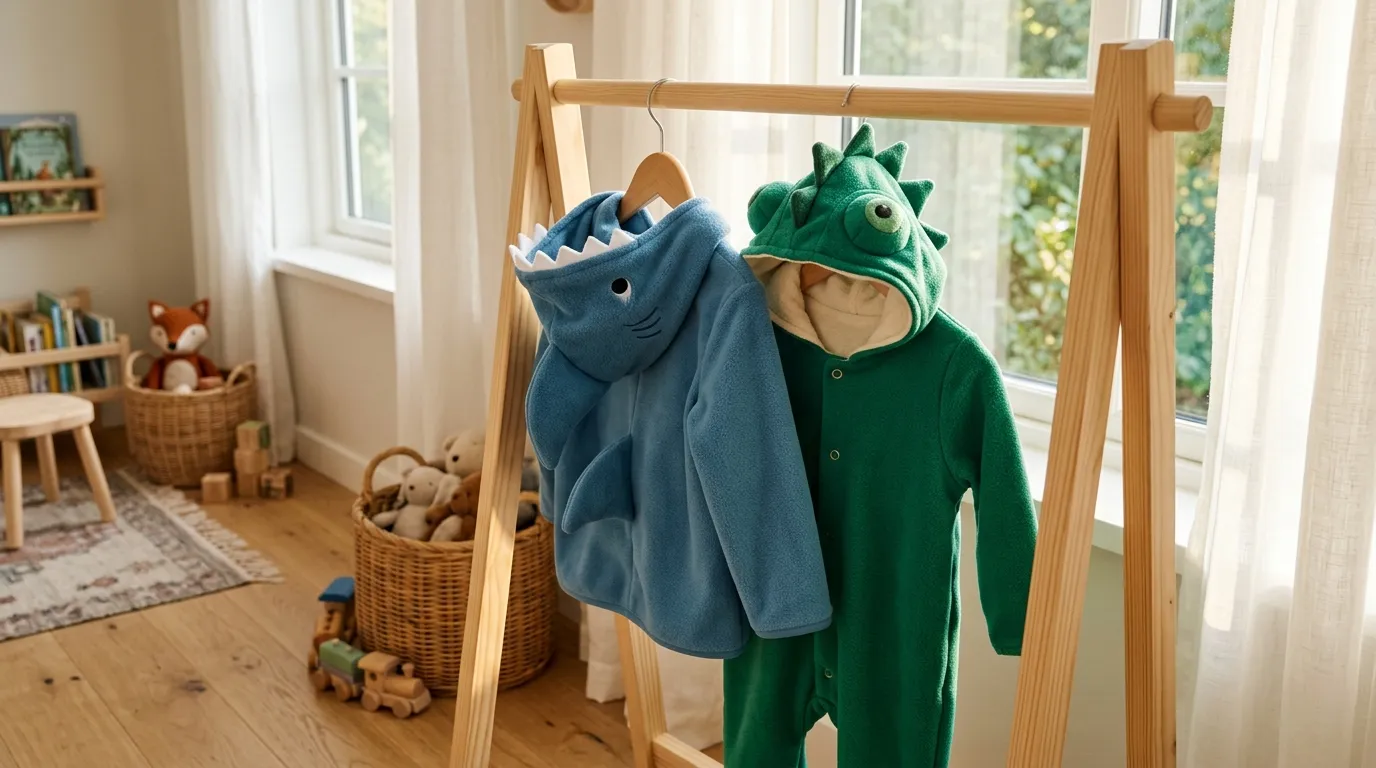
Young children between 18 months and 5 years are in what Montessori educators call the sensitive period for order. When ten synthetic capes, plastic masks, and tangled tutus are crammed into a dark trunk, the visual chaos overwhelms a child's executive function; they dump the basket, scatter the pieces, and walk away within three minutes. By contrast, when three or four structured cotton costumes hang evenly spaced on natural wooden child hangers, the child can visually scan each character—pilot, astronaut, race car driver, or ship captain—make a calm, intentional choice, and begin playing immediately.
Turning "One-Day Birthday Outfits" into Daily Learning Tools
Many parents invest in a beautiful personalized costume for a first, second, or fourth birthday party, only to tuck it away in a closet afterward until the child outgrows it. Moving that custom-embroidered jumpsuit onto an accessible Montessori playroom rack multiplies its value tenfold. Instead of being worn once for cake cutting, it becomes a beloved weekly staple that supports hundreds of hours of imaginative storytelling and self-care practice.
2. Five Essential Elements of a Child-Height Montessori Dress-Up Corner
You do not need a sprawling playroom or expensive custom carpentry to set up a Montessori dress-up station. A sunlit 100-by-60 cm (40-by-24 inch) nook in a bedroom corner works wonderfully when equipped with these five child-centered elements:
1. An Open Wooden Clothing Rack with an Accessible Hanging Rod (70–95 cm High)
The single most important measurement is the height of the hanging bar from the floor. For toddlers aged 18 months to 3 years, a rod height of 70 to 80 cm (27.5 to 31.5 inches) lets them reach the hanger hook comfortably without tiptoeing while keeping jumpsuit cuffs clear of the floor. For preschoolers aged 3 to 6 years, a rod height of 85 to 100 cm (33.5 to 39 inches) accommodates longer one-piece flight and space suits.
2. A Wall-Mounted Shatterproof Full-Length Child Mirror
In Montessori pedagogy, materials should include a built-in control of error—a way for the child to check their own work without needing an adult to say "good job" or "that's backward." Mounting a shatterproof acrylic safety mirror vertically right beside the costume rack (starting 15 cm above the baseboard) lets your child inspect their own reflection, verify that their embroidered name patch faces forward, and admire their zipped-up uniform.
3. A Low Wooden Dressing Stool or Firm Floor Cushion
Putting on a one-piece jumpsuit requires stepping both feet into the leg openings before pulling the torso up. Standing on one foot requires advanced balance that most two- and three-year-olds are still developing. Placing a sturdy 22 to 25 cm (9-inch) wooden stool or firm woven floor pouf directly in front of the mirror gives your child a stable seat to slide their legs into the jumpsuit cuffs before standing up to slip their arms into the sleeves.
4. Smooth Child-Sized Wooden Hangers (28–32 cm Wide)
Standard adult hangers stretch out small necklines and get stuck inside toddler shoulder seams. Choose smooth, rounded wooden kids' hangers with slight shoulder notches—or simple child-height wooden wall pegs with sewn neck loops for under-two toddlers—so taking an outfit down and hanging it back up feels effortless.
5. Two Bottom-Shelf Baskets for Hats & Theme Storybooks
Use the bottom shelf of your Montessori rack for two low-sided woven baskets: one holding soft soft-brimmed hats, nautical headbands, or wooden binoculars, and a second holding three illustrated picture books about space travel, airplanes, racing cars, or ocean voyages.

3. Storage Comparison: Deep Dress-Up Toy Chest vs. Open Montessori Costume Rack
Wondering whether switching from a closed toy bin to an open wooden hanging rack truly changes how your child plays and cleans up? Compare how the two setups perform in daily family life:
| Playroom & Developmental Factor | Closed Deep Dress-Up Toy Chest / Bin | Open Montessori Child-Height Costume Rack |
|---|---|---|
| Visual Clarity & Choice | Low; outfits at the bottom are hidden and forgotten | High; every costume's color, patches, and name are visible at a glance |
| Garment Care & Longevity | Fabrics wrinkle, Velcro snags tulle, and hats get crushed | Cotton jumpsuits and dresses stay smooth, aired out, and ready to wear |
| Independent Dressing Success | Tangled piles frustrate toddlers into asking parents for help | Pre-oriented hanging garments make self-dressing intuitive and calm |
| Post-Play Cleanup Habit | Clothes are balled up and tossed inside with zero care | Children learn respect for belongings by returning each suit to its hanger |
| Bedroom & Playroom Aesthetics | Creates instant floor clutter whenever the bin is overturned | Personalized heirloom outfits double as warm, inspiring room decor |
4. Four Easy-Entry, Front-Zipper Personalized Costumes Built for Independent Dressing
Even the best-proportioned wooden rack will frustrate a preschooler if the costumes hanging on it rely on tiny back buttons, stiff synthetic linings, or complicated neck ties. To foster true self-dressing autonomy, stock your child's rack with breathable cotton pieces from the Tiny Trail Kids personalized costume collection featuring accessible front closures and forgiving silhouettes:
1. Personalized Green Aviator Pilot Flight Suit & Aviator Dress
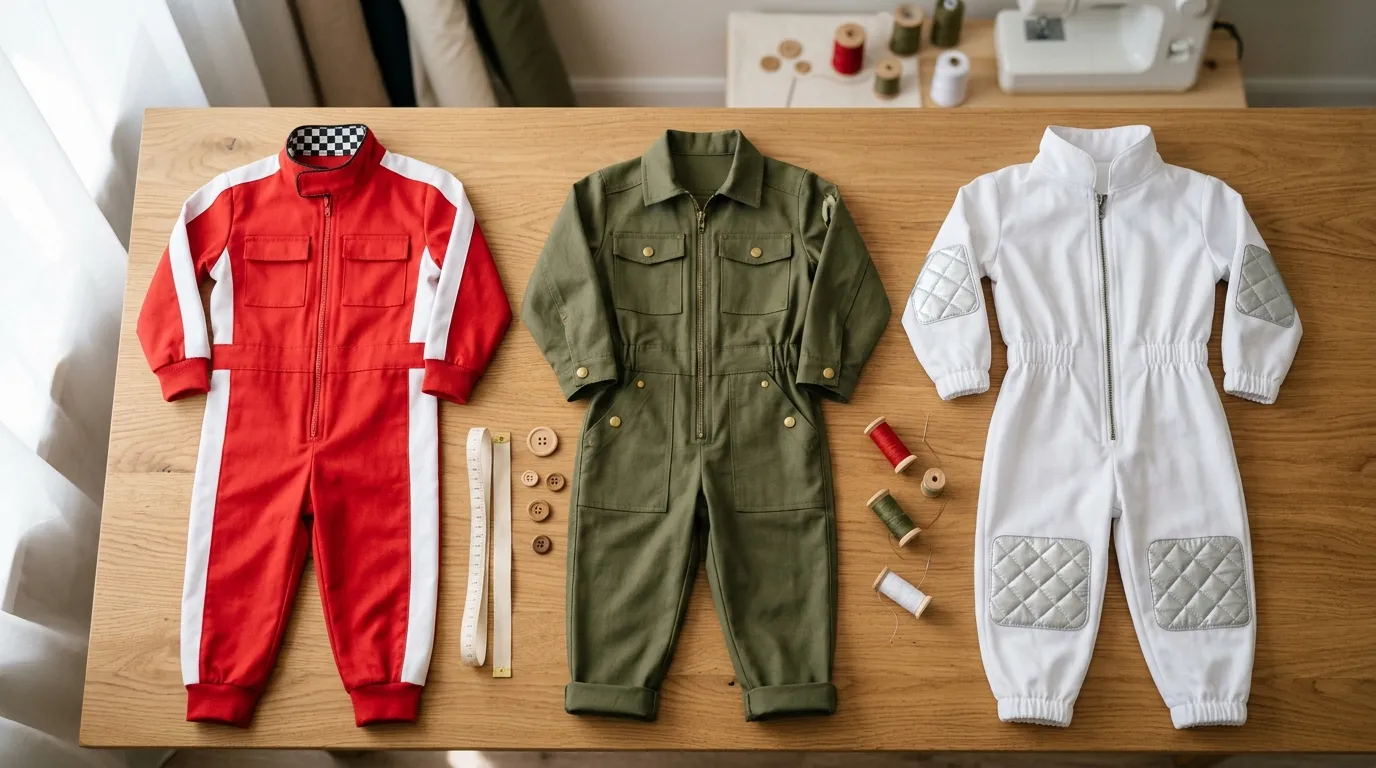
Inside our Tiny Military aviation costume category, the personalized green aviator flight suit for kids is a Montessori favorite. Its smooth, centered front zipper opens wide from collar to waist so a toddler sitting on their dressing stool can step both feet in, stand up, slide their arms through the roomy sleeves, and zip straight to the top. For little aviators who prefer a dress silhouette, our personalized green aviator birthday dress for girls slips on comfortably without scratchy crinolines.
2. Personalized White Astronaut Space Jumpsuit
Preschoolers love transforming their bedroom rug into Mission Control right after breakfast. The personalized white astronaut space jumpsuit for kids from our Tiny Space astronaut collection gives young children bold visual landmarks—black collar and waist detailing, authentic space patches, and their embroidered name on the chest—so they never accidentally step into the jumpsuit backward.
3. Personalized Red Long-Sleeve Race Car Driver Jumpsuits
Inside our Tiny Racer motorsport category, both the personalized red long-sleeve race car jumpsuit with checkered stripes and the personalized red Fast One long-sleeve race car costume feature comfortable leg openings that allow little heels to glide right through without snagging—eliminating the number-one trigger of toddler dressing tantrums.
4. Personalized White-and-Navy Nautical Sailor Dress
Including an easy-fitting dress alongside one-piece jumpsuits teaches children different dressing movements (overhead or step-in entry). Our personalized white and navy nautical sailor dress for girls features a crisp striped sailor collar that makes front-vs-back orientation effortless, plus a matching hair accessory that lets your child practice two-handed mirror placement.
5. Fine-Motor Milestones: How Zippers, Cuffs, and Name Embroidery Teach Practical Life Skills
In authentic Montessori classrooms, children spend hours practicing with wooden Dressing Frames to master zippers, snaps, buttons, and buckles. When your child's dress-up rack holds front-zipper cotton jumpsuits, that exact occupational-therapy exercise happens organically through play:
Pincer Grasp and Bilateral Hand Coordination
Operating a front zipper requires two distinct actions simultaneously: the non-dominant hand stabilizes the bottom of the garment while the dominant thumb and index finger pinch the zipper pull (strengthening the same pincer grasp later used to hold a pencil) and guide it upward along the midline of the body. A three-year-old who resists zipping their winter coat at the front door will happily practice zipping and unzipping their astronaut or race car suit five times a week because the reward is immediate imaginative play.
Early Literacy & Spatial Orientation Through Name Embroidery
One of the most common hurdles for 2- to 4-year-olds learning to dress themselves is putting shirts and pants on backward. Because every Tiny Trail Kids jumpsuit displays your child's custom-embroidered name and colorful patches on the front chest, you can teach a simple self-check rule: "Find your name first—keep your name looking out at the room!" Tracing their fingers over the raised embroidered letters of their own name every morning also provides multi-sensory letter recognition right in their playroom.

6. Age-by-Age Montessori Rack Height & Self-Dressing Progression Chart (18 Months to 7 Years)
Use this developmental reference table to adjust your child's hanging rod height and scaffold their self-dressing skills as they grow from toddlerhood into early elementary school:
| Child Age Stage | Recommended Hanging Rod Height | Independent Dressing Skills Your Child Can Master | Supportive Montessori Parent Technique |
|---|---|---|---|
| 18–24 Months (Young Toddlers) | 65 – 75 cm (25.5 – 29.5 in) | Choosing between 2 costumes on low hooks, pushing arms through pre-started sleeves, pulling a halfway-zipped front zipper to the top, and placing hats on their head. | Lay the opened jumpsuit flat on the floor facing up ("the Montessori flip" or seated step-in) and let the toddler finish the final pull. |
| Ages 2–3 (Older Toddlers) | 75 – 85 cm (29.5 – 33.5 in) | Sitting on the low stool to push both feet through jumpsuit legs, standing to insert arms, zipping and unzipping the front closure, and checking orientation in the mirror. | Practice "hands-in-pockets" patience—wait 15 seconds before offering help, and use verbal cues like "Check if your name patch is in front." |
| Ages 4–5 (Preschoolers) | 85 – 95 cm (33.5 – 37.5 in) | Lifting hangers smoothly off the rod, dressing and undressing 100% solo, fastening waist belts or snaps, and placing the costume back onto its wooden hanger after play. | Invite your preschooler to help rotate 1 or 2 costumes every two weeks and pair matching picture books in the bottom basket. |
| Ages 6–7 (Early Elementary) | 95 – 110 cm (37.5 – 43 in) | Organizing multi-character role-play with siblings, turning costumes inside out for gentle laundry care, and hanging clean garments back in theme order. | Hand over full stewardship of the dress-up rack and involve your child in passing outgrown heirloom suits to younger siblings. |
7. The 4-Costume Capsule Rotation System for Screen-Free Morning & Afternoon Play
In any Montessori space, less is more. When a clothing rail is packed tightly with a dozen hangers, hangers tangle together and fall to the floor whenever a child reaches for one. Keep your dress-up corner serene and inviting with this simple four-step capsule rotation:
- Display Only 3 or 4 Distinct Roles at a Time: Curate a balanced quartet of high-imagination roles—for example, one personalized green aviator flight suit, one white astronaut space jumpsuit, one red checkered race car suit, and one white-and-navy nautical sailor dress.
- Leave 8 to 10 cm (3–4 Inches) Between Hangers: Generous spacing lets little fingers lift a single wooden hanger off the rod cleanly without knocking neighboring outfits down.
- Refresh Props and Storybooks Every Two Weeks: You do not need twenty costumes to keep play fresh! Simply swap the picture book and handmade paper prop in the bottom basket—one week pairing the aviator flight suit with cardboard boarding passes, and the next week pairing the astronaut jumpsuit with glow-in-the-dark star cards.
- Anchor the Late-Afternoon "Screen-Free Hour": Between 4:30 PM and 5:30 PM—when parents are preparing dinner and kids most often beg for tablets or cartoons—invite your child to visit their Montessori dress-up rack and ask, "Which captain or astronaut is on duty in the kitchen control room today?" Getting dressed independently and acting out their character routinely sparks 45+ minutes of focused, screen-free play.
Looking for fabric specifications, sizing charts, or washing guidelines before building your child's capsule rack? Check our frequently asked questions page anytime.
8. Frequently Asked Questions
At what age can we introduce a Montessori dress-up rack in our child's bedroom or playroom?
As soon as your toddler walks steadily—typically around 15 to 18 months—you can introduce a low, wide-base (or wall-anchored) wooden rack with two outfits hanging on low pegs or small wooden hangers. By age 2 to 2.5, most children eagerly step into front-zipper cotton jumpsuits seated on their dressing stool.
What should I do if my toddler pulls all the costumes off the rack onto the floor at once?
Pulling everything down usually happens when there are too many items on the bar or when the hangers are too difficult to manipulate. Immediately reduce the rack to just 2 costumes with wide spacing, switch to simple open wooden hooks if needed, and calmly demonstrate with slow, quiet hand movements how to lift one outfit down and hang it back up after play.
Will personalized cotton costumes hold up to weekly Montessori dress-up play and frequent washing?
Yes! Unlike fragile synthetic party costumes that fray or require dry-cleaning, Tiny Trail Kids jumpsuits and dresses are sewn from durable cotton-rich fabrics with high-density name embroidery. Simply close the front zipper, turn the garment inside out, wash on a gentle 30°C (cold) cycle, and air-dry on a hanger.
Are wooden hangers or wall hooks better for a toddler's Montessori dress-up corner?
For younger toddlers (18 to 30 months), low wooden wall pegs or hooks are the easiest way to hang a jumpsuit by its neck loop independently. From age 3 onward, child-sized wooden hangers (28–32 cm wide) are wonderful because they display the full front silhouette and embroidered name while refining two-handed motor coordination.
Should I let my preschooler wear their personalized pilot, astronaut, or race car jumpsuit outside the house for errands or preschool?
Absolutely! Because our costumes are tailored from breathable, skin-friendly cotton rather than sweaty plastic fabrics, they feel just as comfortable at the grocery store, park, or preschool classroom as everyday play clothes—and letting your child wear their self-chosen outfit builds tremendous pride and autonomy.
How do I make sure the mirror and wooden rack in a Montessori dress-up corner are 100% toddler-safe?
Always choose a shatterproof acrylic (plexiglass) children's safety mirror mounted flush against the wall with heavy-duty anchors—never lean an unanchored glass mirror against a wall. Likewise, select an A-frame wooden clothing rack with a wide, low center of gravity or secure the top frame to a wall stud.