
Tiny Trail Kids • November 25, 2026 • 12
Seasonal Kids' Costume Rotation and Hand-Me-Down Care Guide for Handmade Outfits

Quick Takeaway: Thoughtfully sewn handmade children's costumes are meant for years of imaginative play and sibling memories—not a single afternoon. By combining a Montessori-inspired 3-month seasonal rotation with fabric-specific pre-storage washing and breathable cotton bags, acid-free tissue paper, and natural cedarwood blocks, you can keep playrooms clutter-free and pass every outfit down to younger siblings with zero yellowing, mildew, or lost shape.
A children's dress-up corner has a magical way of growing overnight. Without a gentle system, lightweight summer cotton rompers get tangled beneath bulky polar fleece onesies, delicate tulle tutus are crushed at the bottom of a plastic bin, and toddlers feel overwhelmed by too many options at once. When handmade outfits are cared for on a predictable seasonal rhythm instead, something wonderful happens: the playroom stays calm, every three months feels like an exciting wardrobe refresh, and the exact same beloved costume emerges years later looking crisp enough for a younger brother or sister to wear with pride.
In this comprehensive guide, we walk through how to build a four-season Montessori costume rotation using handmade cotton twill, polar fleece, tulle, sequin, and embroidered outfits from the Tiny Trail Kids handmade costume collection, how to clean and store each textile without trapping humidity, and how to turn sibling hand-me-downs into a joyful family tradition.
Why Montessori-Style Seasonal Costume Rotation Works
One of the quiet secrets of Montessori home environments is curated simplicity. Just as rotating toys prevents sensory overload and deepens concentration, rotating dress-up clothes keeps pretend play focused, inviting, and tidy. When fifteen costumes are crammed onto a single hook or dumped into an overflowing basket, young children experience decision fatigue—they pull everything onto the floor, lose interest quickly, and rarely return outfits neatly afterward.
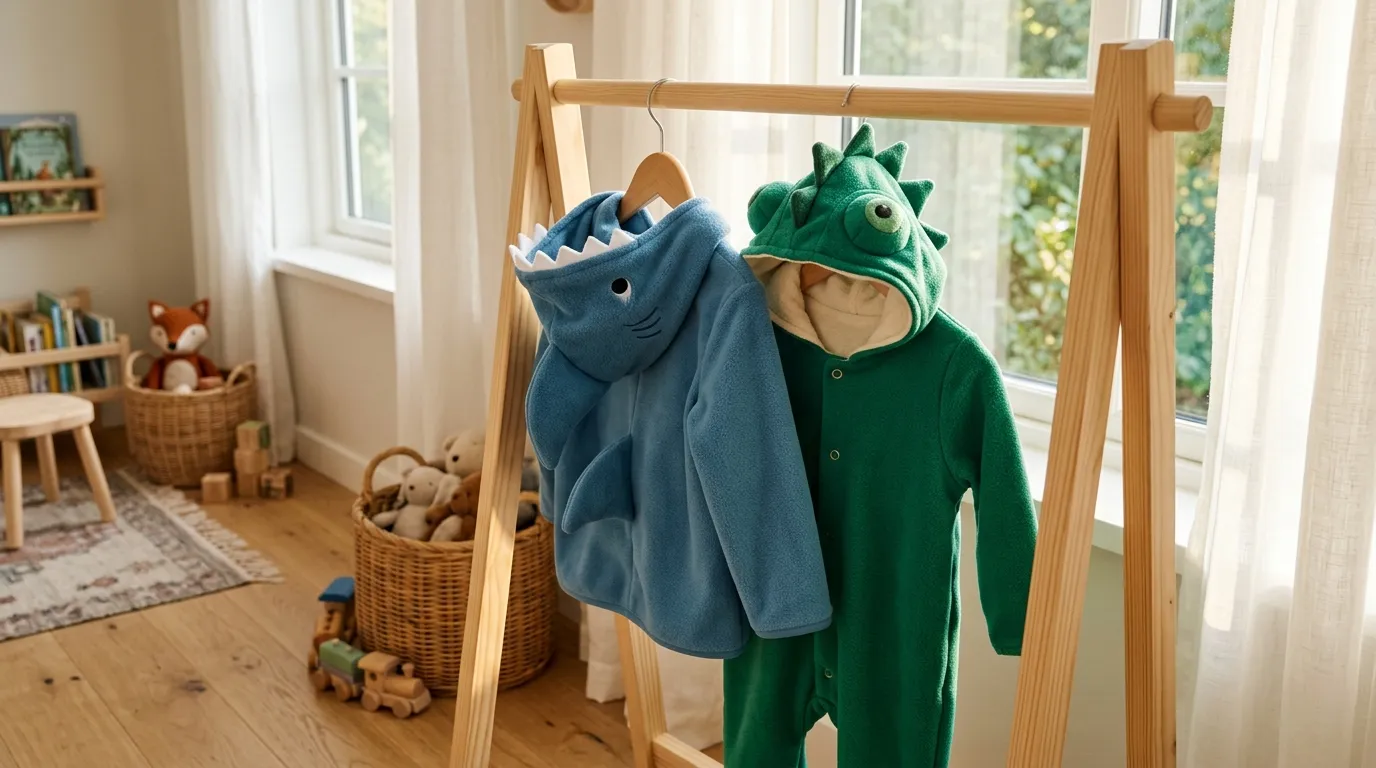
Keeping only three to five season-appropriate pieces visible on a low, child-height rack transforms daily play. Toddlers can see each outfit clearly, choose independently, and put it back on a wide wooden hanger without adult rescue. Even better, swapping the curated selection every three months renews the thrill of discovery. A polar chameleon jumpsuit or short-sleeve astronaut suit that has rested peacefully in storage for six months feels brand new when it reappears for its season—extending engagement without adding clutter to your home.
- Eliminates playroom chaos: Fewer hanging outfits mean less floor piling, quicker clean-up, and richer, longer pretend-play storylines.
- Supports natural thermal comfort: Rotating out heavy fleece in July and breezy rompers in January gently removes daily wardrobe negotiations while keeping kids comfortable.
- Reduces fabric fatigue: Resting handmade garments between seasons lowers cumulative wear on seams, snaps, zippers, and embroidery so pieces stay heirloom-ready for siblings.
- Encourages independent dressing: A tidy, accessible seasonal rack pairs beautifully with potty-training-friendly kids' costumes and easy-on toddler dressing routines, helping little ones dress and undress with confidence.
A 3-Month Quarterly Costume Rotation Calendar
You do not need a complicated spreadsheet to maintain seasonal rotation—simply tie your swap to the four calendar transitions (early March, early June, early September, and early December). Spending twenty minutes resetting the dress-up rack four times a year keeps every outfit matched to real weather and play habits.
Spring and Summer: Breathable Short-Sleeve Cotton Rompers and Dresses
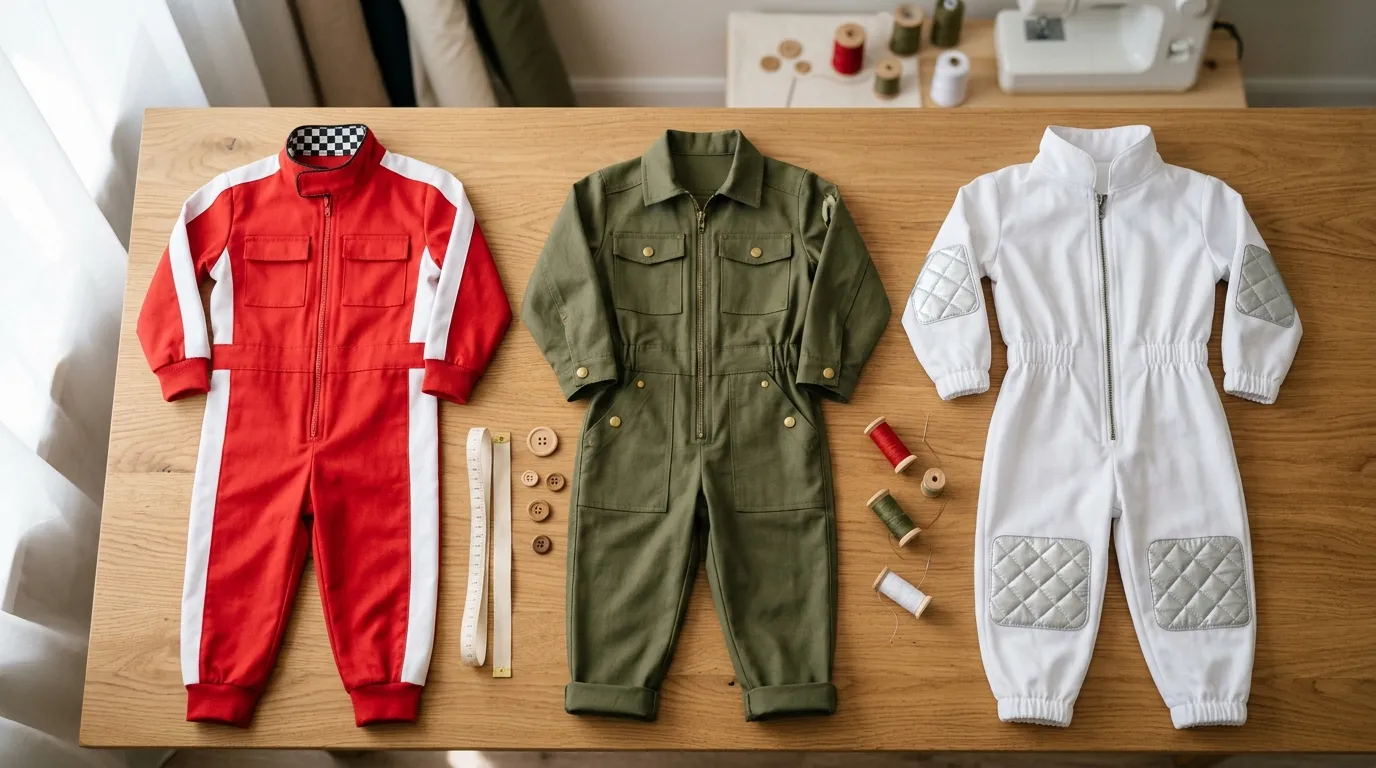
As temperatures climb and play shifts toward sunlit living rooms, backyards, and warm-weather birthday celebrations, prioritize breathable woven cotton, soft short sleeves, and airy silhouettes that wick moisture away from sensitive skin. Standout warm-weather rotation pieces include the personalized white short-sleeve race car costume and the crisp short-sleeve white astronaut space suit, both designed for effortless movement in warm months. For nautical outings, garden birthdays, and breezy summer adventures, rotate in the white and navy nautical sailor costume, the green aviator birthday dress, or the personalized olive green birthday outfit. Because light summer cotton absorbs perspiration, sunscreen, and fruit snacks more frequently, thorough end-of-summer laundering is essential before packing these away.
Autumn and Winter: Cozy Polar Fleece Onesies, Hoodies, and Capes
When crisp autumn mornings and chilly winter afternoons arrive, cozy polar fleece onesies, full-sleeve woven jumpsuits, and warm capes take center stage. Soft, huggable favorites such as the green polar fleece chameleon jumpsuit, the purple fleece chameleon jumpsuit, and the personalized white fleece bunny onesie turn chilly indoor play into cozy storytime adventures. For brisk outdoor strolls, autumn festivals, and winter dress-up days, pair thermal base layers underneath the black and orange pumpkin cape vest and pants set, the red long-sleeve race car jumpsuit, the olive green long-sleeve pilot jumpsuit, or the long-sleeve white astronaut jumpsuit.
Transitional Seasons: Versatile Pieces Built for Layering
During unpredictable spring and early-autumn weeks—when mornings feel brisk and afternoons turn sunny—separates and hooded pullovers shine. Layering a lightweight cotton tee under the personalized blue shark fin hoodie, the blue fleece ocean octopus hoodie, the spotted blue monster hooded top and pants set, or the handmade fleece gamer hooded sweatshirt bridges the gap between everyday playground wear and spontaneous imaginative role-play.
Fabric-Specific Pre-Storage Cleaning and Prep Protocol
The single most important step in hand-me-down preservation happens before an outfit ever touches a storage bag. Many parents assume that a costume worn briefly for a birthday party looks spotless and can go straight into a chest. In reality, invisible traces of apple juice, milk, cake frosting, body oils, and sunscreen sit silently in the fibers—and over three to twelve months of storage, those colorless sugars oxidize into stubborn yellow or brown patches while attracting moths and musty odors. Treating each handmade textile according to its fiber chemistry protects color, softness, and structural integrity for years.
Cotton Twill and Woven Cotton Outfits
Structured woven cotton pieces—including racing jumpsuits, astronaut suits, aviator uniforms, sailor dresses, and the personalized green police officer uniform—reward gentle, residue-free laundering:
- Fasten every zipper, snap every stud, and close hook-and-loop tabs before washing so hardware never snags surrounding fabric.
- Pre-treat collar edges, cuffs, and knees with cool water and a mild plant-based stain soap to lift invisible sugars and perspiration before they set.
- Turn garments inside out and wash on a gentle 30°C (86°F) cycle using a mild, enzyme-light baby detergent free of chlorine bleach and optical brighteners (optical brighteners can accelerate yellowing on white cotton during long storage).
- Skip high-heat tumble drying; reshape seams gently while damp and air-dry flat or on a padded wide wooden hanger in indirect shade until bone-dry.
Polar Fleece and Brushed Cotton Fleece
Plush polar fleece pieces—like chameleon jumpsuits, bunny onesies, ocean animal hoodies, and gamer sweatshirts—stay cloud-soft across multiple children when protected from heat, friction, and waxy residues:
- Turn the costume inside out and place it inside a spacious, breathable cotton mesh laundry bag to minimize drum friction and prevent surface pilling.
- Never use liquid fabric softener. Softeners coat polar fibers in a waxy film that flattens loft, reduces breathability, and locks in stale odors over months of storage.
- Select a gentle cold or 30°C wash with a low spin speed (600–800 RPM), then lay flat on a clean cotton towel away from direct radiators or harsh sun.
- Once completely dry, lightly sweep the nap in one direction with a soft-bristled wooden garment brush to restore plush loft before folding.

Tulle Tutus and Layered Dresses
Airy tulle layers on outfits such as the orange fox tutu skirt and vest or the personalized black sequin dress with velvet bows and tulle should never face heavy machine agitation. Soak gently for ten to fifteen minutes in lukewarm water with a few drops of mild baby wash, swish softly, and rinse in clean cool water. Never wring or twist wet tulle; instead, sandwich the skirt inside a thick dry towel and press gently to absorb water, then hang from waist loops to dry. Before storing, slip sheets of white acid-free tissue paper between the tulle layers and fold loosely or roll softly so the skirt bounces back with full volume next year.
Holographic Foil, Reflective Trim, and Sequin Accents
Eye-catching finishes—like the shimmering tentacles on the hologram sequin octopus hoodie, the bright safety accents on the black race car jumpsuit with reflective strips, and sparkling party bodices—are sensitive to heat and abrasion. Hand-wash in cool water or use a delicate cold cycle inside a protective mesh bag, and avoid tumble dryers and direct irons entirely. When folding for seasonal storage, always place a crisp sheet of white acid-free tissue paper between embellished faces so sequins cannot snag nearby knits and reflective or holographic surfaces never stick together during warm months.
Embroidered Personalization and Stitched Badges
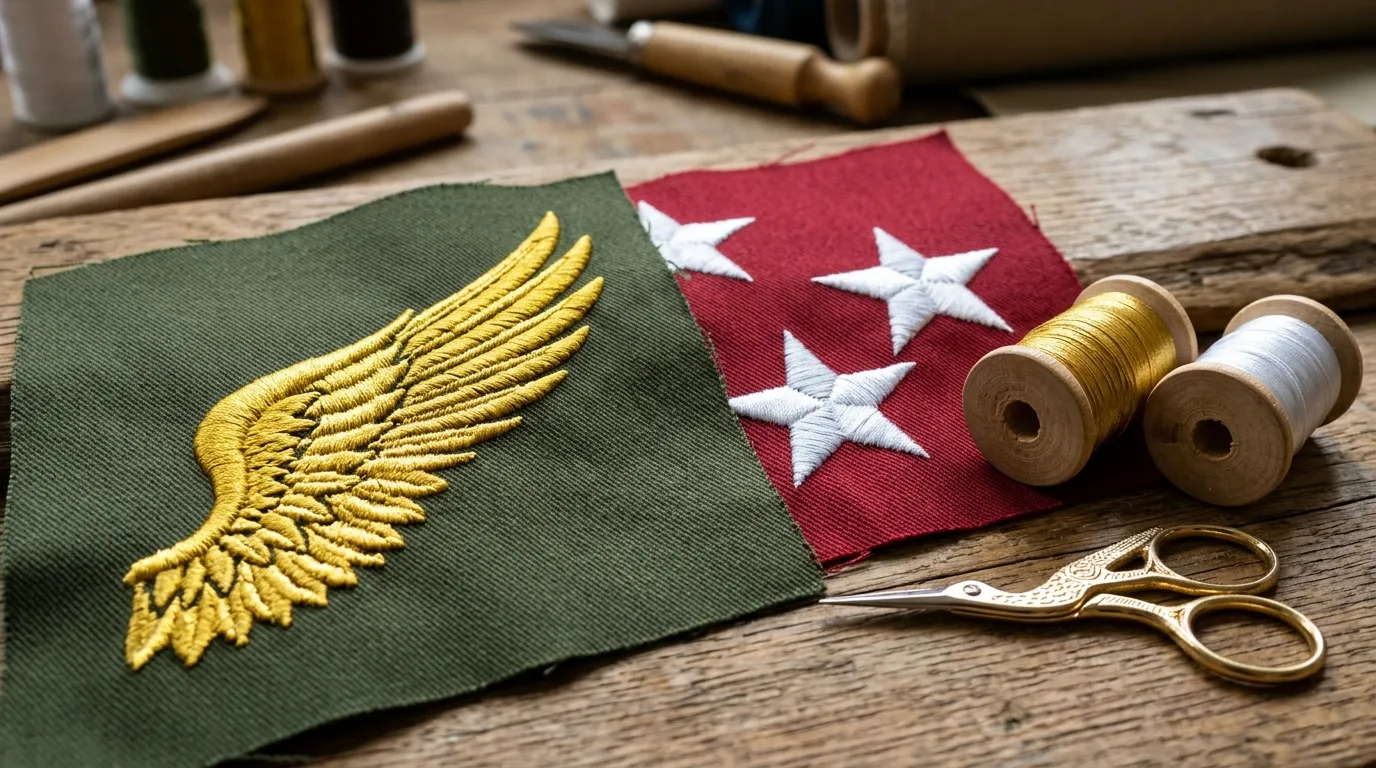
Custom name embroidery, mission patches, and racing emblems give handmade outfits their signature heirloom charm. Always wash embroidered garments inside out to shield satin stitches from friction. Once dry, inspect the backing stabilizer and badge borders; if a tiny loose thread appears, trim it flush with small scissors rather than pulling. If a woven garment needs light pressing before storage, iron from the reverse side through a thin cotton pressing cloth at low heat, and let any residual steam evaporate completely in open air for several hours before sealing the outfit away.
Breathable Storage Systems: Cotton Bags, Acid-Free Tissue, and Cedarwood
Even a freshly laundered costume can deteriorate rapidly if sealed in the wrong container. Dry-cleaner poly bags, zippered vinyl totes, and vacuum-compressed plastic bags are notorious culprits behind ruined keepsakes. Sealed plastic traps microscopic ambient humidity that condenses whenever room temperatures shift, encouraging mildew spots and musty smells. Even worse, many household plastics off-gas stabilizing chemicals such as BHT (butylated hydroxytoluene), which reacts with cotton and causes irreversible yellowing. Vacuum compression also permanently crushes the airy loft of polar fleece and creases tulle fibers beyond repair.
Instead, borrow the gentle, breathable conservation method trusted by textile archivists and heirloom collectors:
- Unbleached cotton garment bags or a natural pine storage chest: Breathable cotton sacks and unfinished wooden chests shield costumes from dust and UV fading while allowing gentle moisture equilibrium so mildew never takes hold.
- White acid-free, lignin-free tissue paper: Ordinary wrapping paper and newsprint contain acids that migrate into textiles and turn bright whites dull yellow. Stuffing folded sleeves, torsos, and collars loosely with crumpled acid-free tissue cushions creases and keeps embroidered panels flat and smooth.
- Natural cedarwood blocks and dried lavender sachets: Skip harsh chemical naphthalene mothballs, which leave toxic fumes unsafe for nursery closets. Instead, tuck natural red cedarwood blocks and cotton sachets filled with dried lavender into the corners of the chest (keep raw cedar separated from fabric by tissue paper so natural wood oils never leave marks). Lightly sand cedar blocks once a year with fine-grit paper to refresh their crisp protective scent.
- Cool, dark, dry closet microclimate: Store your costume chest or cotton bags on an upper nursery closet shelf or under a bed inside climate-controlled living space (ideally 40–50% relative humidity). Avoid damp basements, garages, and uninsulated attics where summer heat weakens trims and winter dampness invites odors.
- Clear tie-on tags: Tie a cotton ribbon around each tissue-wrapped bundle with a simple cardstock label—such as "Autumn–Winter | Size 3T–4T | Green Chameleon & Olive Pilot"—so seasonal swaps and sibling hand-downs take seconds rather than rummaging through every parcel.
Costume Storage Methods Comparison Table
Use this side-by-side comparison to choose the safest long-term storage setup for your family's handmade outfits:
| Storage Method | Airflow & Humidity Control | Yellowing & Mildew Risk | Fleece Loft & Tulle Shape | Hand-Me-Down Lifespan |
|---|---|---|---|---|
| Breathable Cotton Bag + Acid-Free Tissue + Cedar | Excellent airflow, zero trapped condensation | Very low (natural protection) | Outstanding, cushioned folds prevent creases | 5+ years across multiple siblings |
| Pine Wooden Storage Chest + Tissue Paper | Balanced breathability, full UV light blocking | Very low (when lined with acid-free tissue) | Very good, flat horizontal stacking | 5+ years, ideal for family heirlooms |
| Airtight Sealed Plastic Bin | Poor, traps residual moisture during temp swings | Moderate to high (mustiness & BHT yellowing) | Fair, heavy stacks can flatten lower layers | Short-term only (1–2 months) |
| Vacuum-Sealed Plastic Bag | None, fibers suffocate without air exchange | High (micro-moisture breeds mildew quickly) | Poor, permanently crushes polar & tulle | Not recommended for handmade outfits |
| Thin Wire Hanger in Open Closet | Open air, but exposed to dust & daylight | Moderate UV fading on bright colors | Poor, stretches woven jumpsuit shoulders | Active season only (switch to wide wood hangers) |
The takeaway is clear: natural breathability wins every time. If you already own sturdy plastic totes and want to repurpose them temporarily, line the interior with a clean cotton pillowcase, wrap every outfit in white acid-free tissue paper, leave the lid slightly unlatched for airflow, and keep the bin inside a climate-stable bedroom closet rather than a garage or basement.
Smart Sibling Hand-Me-Down Planning
Handmade costumes built with sturdy seams, generous cuffs, and soft natural fabrics are meant to live more than one chapter. A little forward planning ensures that outfits glide smoothly from an older sibling to a younger one—both practically and emotionally.
Choosing Gender-Neutral, Timeless Base Themes
When shopping for a firstborn, you never know whether a younger sibling will be a brother or sister—or what favorite animals and heroes they will fall in love with. Starting your family dress-up collection with gender-neutral, timeless themes such as astronauts, race car drivers, pilots, chameleons, bunnies, sharks, octopuses, friendly blue monsters, and autumn pumpkins makes sibling transitions effortless. A crisp white astronaut suit, olive pilot jumpsuit, or green fleece chameleon onesie sparks the exact same joy for boys and girls alike across every age stage.
Refreshing Personalized Costumes with Fresh Name Patches
Many parents love custom embroidery yet hesitate because they want to pass the outfit down later. Fortunately, personalization and hand-me-downs work together effortlessly when you use one of three thoughtful strategies:
- Multi-sibling personalization from day one: Consider embroidering your family surname, shared initials, or timeless titles such as "Captain", "Racer #1", "Pilot", or "Explorer" so any child in the family can step straight into the role.
- Adding a fresh woven name patch over earlier embroidery: If an older sibling's first name is stitched directly onto the chest, avoid unpicking tight embroidery threads that could leave needle holes. Instead, have a neatly finished fabric name patch stitched right over the original nameplate when the younger sibling inherits it—preserving the garment while giving the new wearer unmistakable personal ownership.
- Swappable name badges: For uniforms and flight suits, attaching a soft stitched or hook-and-loop nameplate lets you update the name in minutes whenever the outfit graduates to a younger brother or sister.
Planning Around Sibling Age Gaps and Growing Fits
Even when siblings are born in slightly different seasons, thoughtful sizing keeps your rotation working smoothly. Outfits with stretchy ribbed cuffs, turn-up hems, and relaxed shoulders comfortably bridge a full twelve- to eighteen-month growth span. A cozy polar fleece onesie worn by a winter-born big brother at age two can easily fit an autumn-born little sister as a roomy eighteen-month layer the following fall—giving every carefully crafted stitch twice the mileage.
The Emotional Transition: A Sibling "Baton-Passing" Ritual
Hand-me-downs feel completely different to children depending on how they are presented. Rather than tossing an older child's outgrown outfit onto the younger child's dresser, create a warm "Baton-Passing Ritual." Wrap the freshly aired costume in white acid-free tissue paper tied with a soft cotton ribbon, and invite the older sibling to present it proudly to the younger one. Look through a few favorite snapshots of the older child wearing that exact costume—perhaps from an earlier celebration styled with ideas from our DIY kids' birthday photo backdrop and handmade costume styling guide—and capture a matching portrait of the new wearer.
This simple ceremony transforms potential sibling resentment into genuine pride. Older children love stepping into a mentor role, teaching younger siblings the "secret mission rules" of the outfit and sparking matching kids' costumes and cooperative pretend play for siblings. Passing down a beloved astronaut, pilot, or hero suit can even carry comforting emotional power—serving as a trusted "bravery suit" inspired by our guide on hero costumes and bravery play for kids afraid of the dark.

7 Common Mistakes When Storing Handmade Kids' Costumes (and How to Avoid Them)
Even well-meaning parents can accidentally shorten the life of a treasured outfit with a few common storage habits. Watch out for these seven pitfalls:
- Packing away costumes that are 95% dry: Thick polar seams, hoods, and layered waistbands often hold hidden dampness hours after the outer fabric feels dry. Fix: Let every washed costume rest in an airy room for a full 24 hours before wrapping and boxing it.
- Skipping a pre-storage wash because the outfit "looks clean": Invisible milk, juice, and perspiration stains oxidize silently over months and turn bright white fabrics yellow. Fix: Always give worn outfits a gentle, fabric-appropriate wash before long-term storage.
- Using fabric softener on polar fleece and cotton knits: Softener residue coats fibers, flattens fleece plushness, and traps stale storage smells. Fix: Use an extra plain-water rinse instead and fluff dry polar fleece with a soft wooden garment brush.
- Compressing fleece or tulle in vacuum bags: Months of tight compression permanently crush polar loft and crease tulle skirts. Fix: Fold loosely with acid-free tissue inside breathable cotton bags or a wooden chest without heavy items stacked on top.
- Hanging heavy woven jumpsuits on thin wire hangers: Over several months, gravity stretches shoulder seams and leaves permanent wire dents in cotton twill. Fix: Fold heavy jumpsuits flat with tissue paper for off-season storage, and use wide, smooth child-sized wooden hangers during active seasons.
- Using chemical naphthalene mothballs in nursery closets: Strong chemical moth repellents linger in fabrics and irritate young children's airways. Fix: Rely on natural red cedarwood blocks and dried lavender sachets tucked safely outside the tissue wrap.
- Storing dress-up boxes in hot attics, garages, or damp basements: Extreme heat weakens reflective trims and adhesive backing, while basement humidity invites mildew. Fix: Keep handmade costumes inside a cool, dark, dry interior bedroom closet.
Seasonal Switchover Checklist: Closing a Season in 20 Minutes
Make each quarterly transition effortless by following this quick six-step routine:
- 1. Quick mend check: Test zippers, snaps, waist elastic, and embroidered patch edges; secure any tiny loose stitch before washing.
- 2. Sort and wash by fabric: Separate woven cotton, polar fleece (in cotton mesh bags), hand-wash tulle, and cool-wash sequin or reflective trims.
- 3. Dry thoroughly and brush: Air-dry flat in the shade, rest for 24 hours, and lightly brush polar fleece nap with a wooden garment brush.
- 4. Fold with acid-free tissue: Cushion sleeves, collars, and embellished layers with crisp white acid-free tissue paper to prevent creases and snags.
- 5. Pack naturally and label: Place wrapped bundles inside cotton bags or a pine chest with cedarwood blocks and lavender sachets, then tie on a season-and-size tag.
- 6. Curate the new season rack: Hang three to five fresh outfits suited to the coming three months on your child's low Montessori rack and invite them to explore.
Frequently Asked Questions
How often should I rotate my child's handmade costumes?
Rotating every three months—aligned with spring, summer, autumn, and winter—hits the sweet spot. Keeping three to five season-appropriate pieces on display prevents clutter and keeps pretend play feeling fresh all year. If your toddler has an inseparable comfort costume, simply leave that favorite piece on the rack across two seasons while rotating the surrounding outfits.
How can I safely brighten slight yellowing on a stored white cotton costume?
Skip chlorine bleach, which weakens cotton fibers and fades embroidered details. Instead, soak the garment for one to two hours in lukewarm water with a mild, chlorine-free oxygen brightener or a gentle baking soda bath, wash at 30°C on delicate, and air-dry briefly in gentle indirect daylight. A short kiss of natural sunlight safely softens mild oxidation without harsh chemicals.
How do I pass down a personalized costume embroidered with an older sibling's name?
Rather than ripping out dense stitches that can leave needle marks in the fabric, stitch a coordinating fabric name patch bearing the younger sibling's name neatly right over the original embroidery. When planning ahead for future siblings, choosing your family surname, shared initials, or timeless role titles like "Captain," "Astronaut," or "Pilot" also makes passing outfits down completely effortless.
Are cedarwood blocks and dried lavender sachets safe around babies and toddlers?
Yes—natural red cedarwood and dried lavender are far gentler, toxin-free alternatives to chemical mothballs. Keep blocks tucked inside closed off-season storage chests out of reach of curious mouths, and place cedarwood outside the acid-free tissue wrap so natural wood oils do not touch fabric directly. When you unpack a costume for the new season, simply air it out in the room for a few hours before dressing your child.
Do I really need to wash a costume if my child only wore it for a couple of hours?
Yes, before storing it away for three months or longer, gentle cleaning is always worth the effort. Invisible traces of birthday cake icing, fruit juice, sunscreen, and light perspiration oxidize in closed storage and reappear months later as yellowish spots. Even for delicate tulle or sequin pieces, a quick cool hand-soak and gentle towel press removes hidden residues safely.
How many siblings can a well-cared-for handmade cotton or polar costume last through?
With gentle 30°C washing, zero fabric softener, flat air-drying, and breathable storage away from humidity, a thoughtfully stitched cotton twill or thick polar fleece costume easily lasts through two to three siblings while retaining its soft texture, crisp colors, and clean shape—and still looks lovely enough afterward to tuck into a family keepsake chest.
Costumes Cared for with Love, Stories Shared Across Siblings
Caring for handmade children's costumes is about much more than preserving fabric—it is about honoring the giggles, brave adventures, and milestone celebrations woven into every seam. With a calm Montessori seasonal rotation, gentle fabric-specific laundering, breathable cotton storage, and a joyful sibling baton-passing tradition, each outfit becomes a lasting chapter in your family's story.
Explore timeless, heirloom-worthy designs ready for seasons of play across our Tiny Trail Kids full costume collection, discover the heart behind our handmade craft on our About Us page, browse more parenting and playroom guides on the Tiny Trail Kids blog, or reach out anytime through our Contact page with sizing or personalization questions for your little explorers.