Tiny Trail Kids • November 13, 2026 • 13
Preschool Orientation Week Dress-Up Play Guide

Executive Summary: Preschool and kindergarten orientation week is one of the most significant emotional milestones in early childhood. As toddlers and preschoolers step out of the familiar comfort of home into a bustling classroom of new peers and teachers, imaginative dress-up play serves as a powerful psychological bridge. Stepping into a breathable, personalized aviator flight suit, a helpful police officer uniform, or a playful woodland animal outfit activates the "hero effect"—lowering separation anxiety, encouraging self-regulation, and turning shy classroom introductions into joyful collaborative adventures.
Table of Contents
- 1. The Psychology of Dress-Up Play During Preschool Orientation: How symbolic role-play and the "Batman Effect" ease separation anxiety.
- 2. Preparing at Home Before Day One: Playful dress-up rehearsals that make school routines predictable and exciting.
- 3. Five Classroom Icebreaker Dress-Up Games: Low-pressure group scenarios that help shy preschoolers bond during circle time.
- 4. Age-by-Age Preschool Orientation Play Matrix: Matching social-emotional needs with the right costume structure from ages 2 to 6.
- 5. Choosing Classroom-Ready Costumes: Breathability, restroom independence, and sensory-friendly construction.
- 6. Why Personalized Name Embroidery Builds Instant Belonging: Helping teachers and classmates connect by name from the very first morning.
- 7. Five-Day Orientation Play Schedule & Feature Comparison Table: A practical Monday-through-Friday guide for parents and educators.
- 8. Frequently Asked Questions (FAQ): Expert answers to common parent and teacher questions on orientation week dress-up play.
1. The Psychology of Dress-Up Play During Preschool Orientation
Walking through the preschool classroom door for the very first time is an monumental sensory and emotional leap for a young child. Between ages two and five, children are still developing object permanence and time perception; when a parent waves goodbye at drop-off, a toddler cannot easily visualize how soon pick-up time will arrive. Unfamiliar acoustics, new classroom rules, and a room full of unknown peers can quickly trigger clinginess, tears, or quiet withdrawal—a completely normal developmental response known as separation anxiety.
Early childhood psychologists and educators consistently point to dramatic role-play as the gentlest, most effective antidote to first-week jitters. Developmental research on self-distancing—often referred to as the "Batman Effect"—demonstrates that when young children put on a costume representing a capable, brave, or imaginative character, their executive function, emotional resilience, and perseverance increase remarkably. Instead of feeling like a vulnerable toddler navigating an unfamiliar room, a child wearing a personalized green aviator flight suit experiences the morning as a courageous captain reporting to a friendly flight deck.
A thoughtfully chosen costume acts as a comforting social buffer. When a teacher or classmate asks a question, the child does not feel put on the spot; they can respond through their character—giving a crisp pilot salute, showing off their embroidered name patch, or hopping like a friendly forest creature. This shift transforms uncertainty into agency, allowing curiosity to replace hesitation within minutes of entering the room.

2. Preparing at Home Before Day One: Playful Rehearsals
Smooth classroom transitions rarely happen by chance on Monday morning; they are built during the ten days leading up to orientation through playful home rehearsals. Young children thrive on predictability. When they can rehearse the sequence of a school morning through dress-up play in their own living room, their brain builds a reassuring mental map of what to expect.
The "Flight Deck Morning" Drop-Off Rehearsal
A week before preschool begins, invite your child to put on their personalized girls green aviator dress or kids aviator flight suit after breakfast. Turn your hallway into the "Preschool Launchpad." Practice packing a spare outfit and water bottle into their backpack as a "pre-flight checklist." Most importantly, invent a special two-second goodbye ritual—such as a double wing-wiggle and a high-five—that you will repeat at the real classroom door. When orientation day arrives, repeating that exact pilot handshake anchors your child in a familiar, empowering memory.
Stuffed Animal Circle Time Role-Reversal
Arrange five or six plush toys in a circle on the living room rug and let your child take the lead role as the helpful classroom guide while wearing their personalized kids police officer costume. Have one teddy bear pretend to feel shy about missing home, and encourage your child to reassure the bear: "It is okay, Little Bear! We are going to build with blocks, sing songs, and then Mommy comes right back after snack time!" By comforting a stuffed animal while in role, your child internalizes the exact reassurance they will need during their own orientation week.
3. Five Classroom Icebreaker Dress-Up Games
During the first days of preschool, expecting three- and four-year-olds to sit in a circle and verbally introduce themselves can feel overwhelming for quiet learners. Action-oriented dress-up games allow children to connect through movement, shared symbols, and cooperative play long before they feel pressured to speak in front of a group.
Game 1: Sky Mail Co-Pilot Delivery
Give small picture cards (displaying simple icons like a sun, star, apple, or paintbrush) to children dressed in aviator flight suits or pilot dresses. Their mission is to "fly" across the classroom rug with arms outstretched and deliver each card to the matching learning center—the art table, reading nook, or block corner—alongside a co-pilot buddy. Even a child who is not ready to talk can happily glide next to a classmate and place a card on the easel, instantly learning the classroom layout while making a friend.
Game 2: Woodland Habitat Color & Texture Safari
Nature and animal characters create instant common ground among toddlers and preschoolers. When children wear a handmade green chameleon lizard outfit or a fox costume with an orange tutu skirt, the teacher can launch a gentle "Habitat Safari." The chameleon searches the room for soft green objects to blend in with, while the little fox looks for warm orange items. Children giggle, point, and explore the classroom corners together without any social pressure.
Game 3: The Kindness & Safety Patrol
Learning classroom routines—such as lining up for handwashing, pushing in chairs, and sharing building blocks—becomes infinitely more engaging when framed as a heroic mission. Children wearing the personalized state trooper police costume act as the classroom "Kindness Patrol." Their role is to spot classmates doing helpful things, hand out paper gold stars, and lead the line to the playground, transforming rule-following into pride and leadership.
Game 4: The Magic Ruffle Cape Emotion Mirror
Some children prefer arriving at school in their everyday t-shirt and leggings and easing into dress-up once they feel settled. A lightweight, tie-front layer like the red tulle fluffy ruffled bolero jacket can be slipped over regular clothes in five seconds. During music and movement time, the teacher plays different tempos—slow, bouncy, and joyful—while children twirl their ruffled sleeves to express different emotions, releasing physical tension stored in their shoulders.
Game 5: Little Explorers Team Obstacle Course
Out on the playground or inside the gross-motor gym, set up a simple path of foam stepping stones and hula hoops. Preschoolers wearing a personalized military tutu dress or aviator flight suit pair up in two-person explorer teams. One child holds a hoop steady while their partner steps through, then they switch roles. Completing a physical challenge together builds immediate peer trust and camaraderie.
4. Age-by-Age Preschool Orientation Play Matrix
A two-year-old entering a toddler playgroup has very different developmental needs than a five-year-old starting pre-kindergarten. The comparison table below outlines how parents and teachers can tailor orientation dress-up games and costume designs to each age group:
| Age Group | Primary Orientation Need | Best Icebreaker Dress-Up Game | Ideal Costume Features |
|---|---|---|---|
| Ages 2 - 3 (Toddler Nursery) | Tactile comfort, gentle parent transition, parallel sensory play | Animal sound mirror game, peek-a-boo hood play, color matching | Cozy fleece chameleon jumpsuit, stretchy elastic-waist fox tutu |
| Ages 3 - 4 (Preschool) | Learning classroom spaces, bonding with teachers, first buddy play | Sky Mail Co-Pilot card delivery & Magic Ruffle music circle | Breathable cotton aviator suit with name patch, tie-front tulle bolero |
| Ages 4 - 5 (Pre-K) | Peer acceptance, turn-taking, cooperative classroom roles | Kindness Patrol helpers & classroom station leaders | Personalized police officer uniform, aviator dress with removable tutu |
| Ages 5 - 6 (Kindergarten) | Team leadership, group storytelling, rule-based adventure games | Little Explorers obstacle course & collaborative puppet theater | Personalized military dress, full aviator and police role-play sets |
5. Choosing Classroom-Ready Costumes: Comfort & Independence
A costume worn for preschool orientation or weekly classroom dramatic play must perform like everyday school clothing. Children will sit cross-legged on the rug, climb playground structures, paint at easels, and use the restroom with growing independence. Keep these four practical criteria front and center when selecting an orientation week outfit:
- Restroom-Friendly Front Closures: In a busy preschool classroom, children often wait until the last moment to announce they need the bathroom. Front-zip jumpsuits and pull-on elastic-waist tutu skirts allow children to manage restroom trips quickly and independently without struggling with complicated back buttons.
- Breathable, Non-Scratchy Fabrics: High excitement and active group games warm children up quickly. Woven cotton uniforms like the kids police officer jumpsuit and green aviator flight suit allow steady airflow so kids stay cool and focused from morning circle to afternoon pick-up.
- Zero Rigid Masks or Sharp Props: Teachers need to see a child's facial expressions clearly, and children need unobstructed peripheral vision to navigate a new room safely. Soft caps, plush chameleon hoods, and embroidered fabric badges provide rich character detail without blocking sightlines.
- Adaptable Layering: A removable tutu skirt or a lightweight red ruffled tulle bolero jacket lets children adjust their outfit effortlessly when moving between air-conditioned classrooms and sunny outdoor play yards.

6. Why Personalized Name Embroidery Builds Instant Belonging
During orientation week, teachers are working hard to learn twenty new names while helping every child feel seen and valued. Paper stick-on name tags peel off within minutes of floor play, and safety pins have no place in an early childhood classroom. A costume featuring custom name embroidery—such as the personalized girls military dress, personalized girls aviator dress, or custom police suit—solves this challenge with style and warmth.
When a teacher kneels at eye level on the very first morning and says, "Welcome to our classroom, Captain Leo! We saved a spot for you at the block station," the child experiences an immediate surge of belonging. Furthermore, three- to five-year-olds are at the exact developmental stage where recognizing the letters of their own name sparks immense pride. Seeing their name stitched neatly across their chest turns their outfit into a natural conversation starter with curious classmates.
7. Five-Day Orientation Play Schedule & Feature Comparison Table
To help parents and preschool teachers structure a calm, joyful orientation week, here is a five-day thematic play schedule paired with the ideal Tiny Trail Kids designs:
| Orientation Day | Daily Classroom Theme & Game | Recommended Tiny Trail Kids Outfit | Social-Emotional Outcome |
|---|---|---|---|
| Day 1 (Monday) | Brave Takeoff: Doorway Pilot Salute & Classroom Tour | Personalized Green Aviator Flight Suit / Girls Pilot Dress | Transforms drop-off hesitation into confident exploration |
| Day 2 (Tuesday) | Woodland Circle: Animal Sounds & Color Safari | Handmade Green Chameleon Outfit & Orange Fox Tutu Skirt | Sparks shared laughter and non-verbal peer bonding |
| Day 3 (Wednesday) | Community Helpers: Clean-Up Crew & Kindness Patrol | Personalized State Trooper Police Officer Costume | Builds pride in classroom routines and helping peers |
| Day 4 (Thursday) | Rhythm, Movement & Emotion Mirror Dance | Red Tulle Fluffy Ruffled Bolero Jacket | Releases physical tension and encourages creative expression |
| Day 5 (Friday) | Team Adventure: Buddy Obstacle Course in the Yard | Personalized Girls Military Camo Tutu Dress | Cements new friendships and celebrates finishing week one |
After-School Conversation Starters for Parents
When you pick your child up from orientation, avoid asking leading questions like "Did you cry today?" or "Were you scared without Mommy?" Instead, step right back into their imaginative character world. Ask playful, open-ended questions such as, "Where did Captain Pilot fly during outdoor play today?", "Which green toys did the little chameleon hide next to?" or "Who did our Police Officer help at clean-up time?" Framing the school day around their heroic role reinforces positive memories and makes waking up for day two something your child genuinely looks forward to.
Setting Up a Welcoming Classroom Dramatic Play Corner
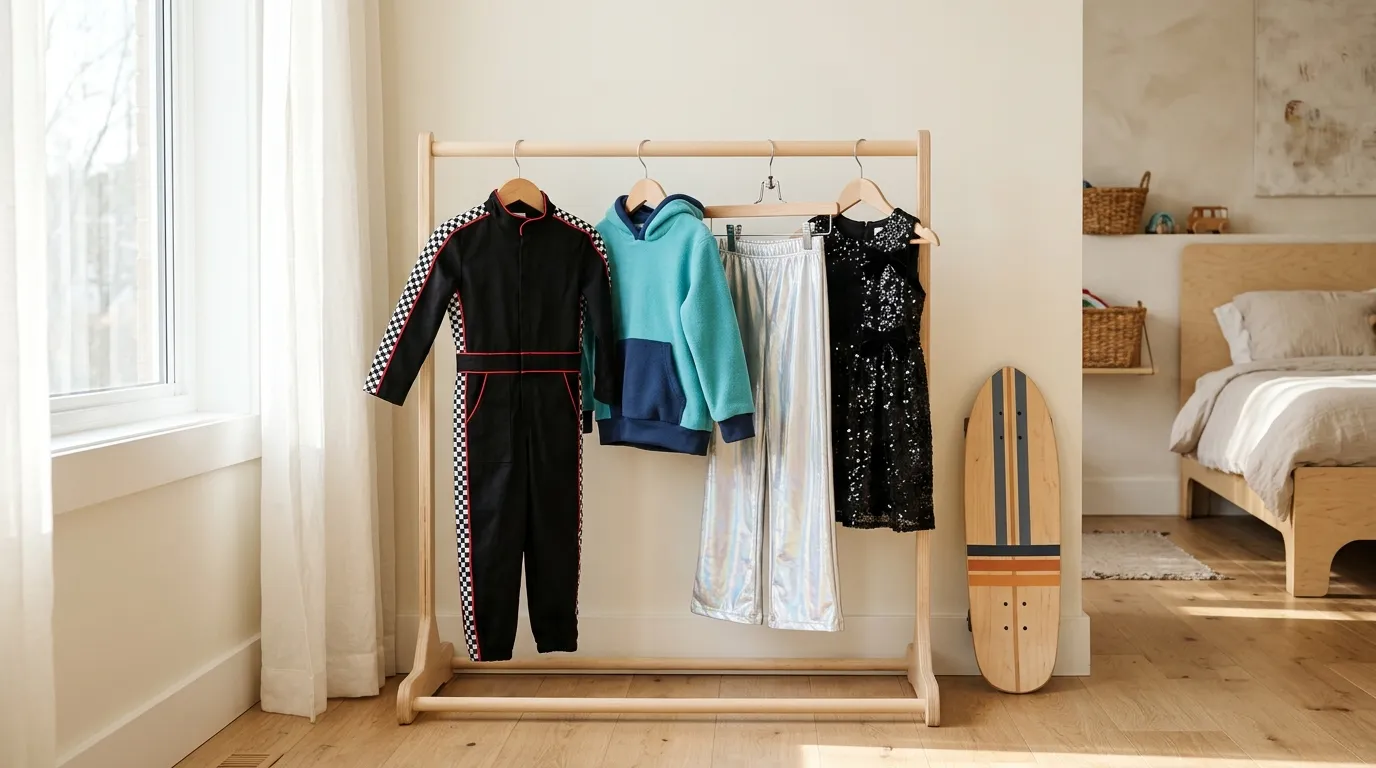
For preschool educators, curating an accessible "Orientation Dress-Up Station" during the first month of school offers children a reliable emotional sanctuary. Place a child-height wooden rack, a shatterproof full-length mirror, and soft floor cushions near the dramatic play center. Stock the rack with easy-on pieces like the orange fox tutu skirt, red ruffled tulle bolero jacket, and breathable cotton career jumpsuits. When two children stand in front of the mirror together adjusting their pilot caps or shaking their tutu skirts, spontaneous giggles and peer conversations blossom naturally, laying the foundation for a warm, inclusive classroom community all year long.
8. Frequently Asked Questions (FAQ)
How does dress-up play reduce separation anxiety during preschool orientation week?
Dress-up and imaginative role-play shift a child's emotional focus from the stress of saying goodbye to the excitement of stepping into a heroic persona. When a child wears a familiar aviator flight suit, police uniform, or woodland animal outfit, they experience a psychological sense of competence and security that transforms entering the classroom into a welcoming adventure.
What fabric and design features are best for preschool orientation week costumes?
Classroom-friendly costumes should prioritize breathable woven cotton jumpsuits, soft fleece onesies, and elastic-waist tutu skirts that allow unrestricted sitting during circle time. Front zippers, snap closures, and embroidered patches without sharp plastic edges ensure children can move, play, and use the restroom independently.
Which dress-up games help shy preschoolers make friends on the first day of school?
Cooperative, low-pressure role-play scenarios work best for reserved children. Games like 'Co-Pilot Flight Crew' or 'Woodland Habitat Explorers' allow shy preschoolers to join group play through non-verbal actions—such as handing over a map or flapping a cape—before naturally warming up to verbal conversation.
How can parents use costumes at home to prepare toddlers for preschool routines?
Starting two weeks before orientation, parents can host playful 'Preschool Morning' rehearsals at home. Wearing a favorite personalized costume while practicing packing a backpack, waving goodbye at the door, and joining a pretend circle time builds predictable mental scripts that dramatically lower first-day jitters.
How should parents wash and maintain dress-up costumes used in preschool classrooms?
Wash breathable cotton flight suits and police jumpsuits inside out on a gentle 30-degree cold cycle to preserve personalized embroidery. Place multi-layered tutu skirts and ruffled tulle bolero jackets inside a mesh laundry bag and hang them to air-dry so they remain fresh and fluffy for weekly school activities.